
She forgot her key and I forgot my watch. We climb through the dining room window and fall onto the carpet. We crawl through the house on hands and knees like spies or robbers. At the top of the stairs, Nix leaps from the shadows, scaring the shit out of me. I meow and claw the air. The cat scampers into Maddy’s room a moment before we shut her door.
I swan dive onto the bed and kick off my shoes as Maddy digs through her underwear drawer. “That’s an obvious hiding place,” I inform her.
“My dad isn’t going through my panties, trust me.” She dangles a Ziploc that holds hairy clumps of green — fungal yet enticing. “Bowl or joint?” she asks with a grin.
“Bowl’s quicker.”
She nods and removes her multicolored pipe from an old blue sock — another odd hiding place.
“Except,” she says, one finger pressed to her bottom lip, “I do need practice rolling.”
“Joint then.”
She puts the pipe away and I stare out the window, trying to spot the traffic light on the corner. All I find is my own face, slightly distorted and badly needing sun.
Maddy lights a stick of sandalwood incense, plops down beside me, and balances our physics textbook on her knees. Like a true scientist, she concentrates on separating the clumps, picking out stems, and sprinkling the pieces onto flimsy rolling paper. I watch her tongue leap between her teeth as she licks the paper, curling it up like a centipede. Then she wields a lighter and casts orange sparks. I imagine the smoke snaking down her throat, swirling past her vocal cords, collecting in her lungs. She coughs, opens the window, and passes the joint to me. We lie on our backs as our exhales rise in slow motion to the ceiling.
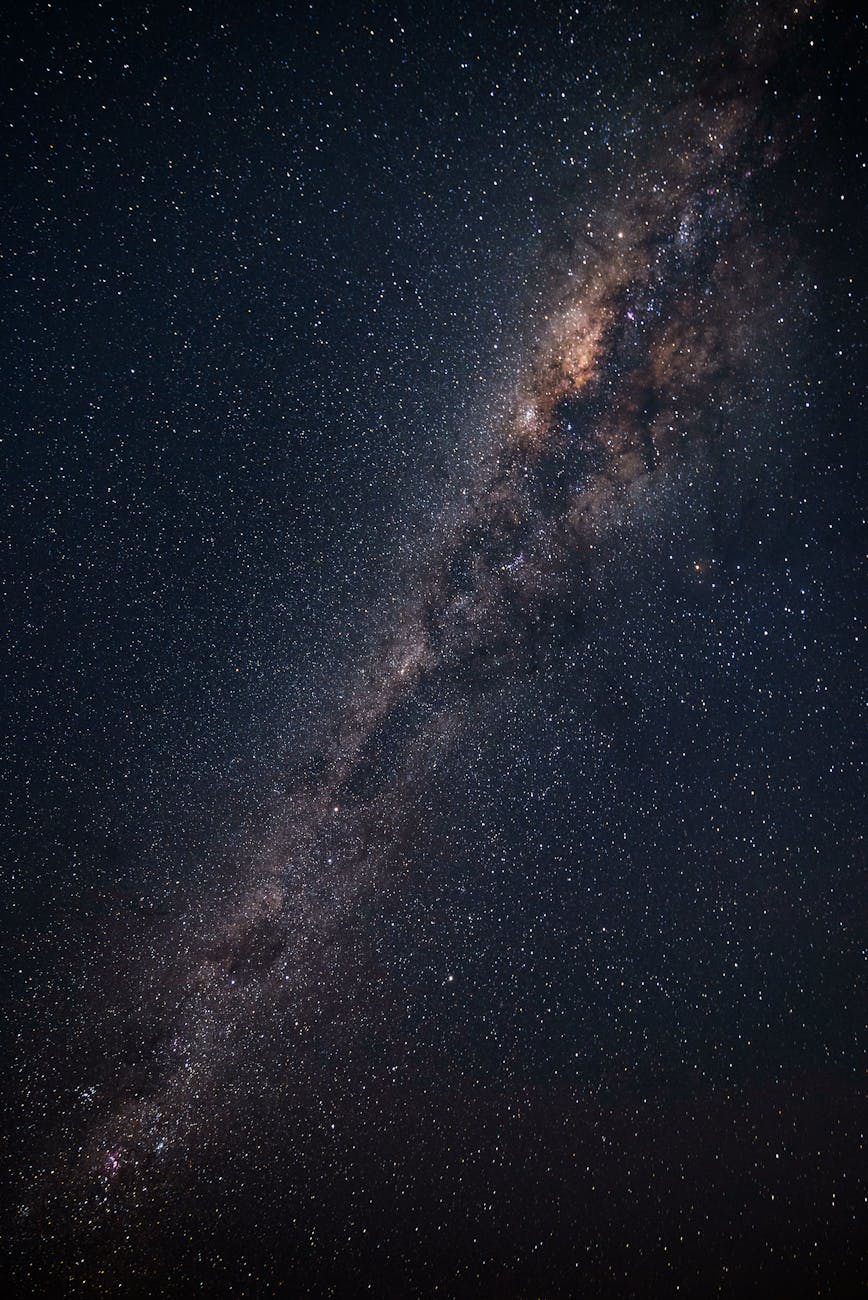
Her matted pink carpet is childhood faded like mine. An anatomical illustration of the human brain is taped above her mirror. A Hubble poster of distant galaxies used to live on the ceiling above her bed — the two of us drunk on science for years — but now there are only globs of blue sticky tack outlining an invisible rectangle. One piece is off by itself, like a tiny planet flung out of orbit.
“That one’s me,” I say, pointing to the stray blue glob.
“It looks just like you, Claire,” she teases, finding my hand and holding it loosely.
I can barely feel her weight on the bed. I watch her inhale and reimagine the smoke turning somersaults down her windpipe. She strokes the dry skin around my knuckles. Our hands are almost the same size and it’s as if I am holding myself.
***
In my dream last night, I didn’t want to go back to my body. A sleep doctor was working on it. He wore a lab coat and a surgical mask that obscured his face. I stalked the room like a ghost: immaterial, invisible.
My body was naked, lying sunny-side up on a medical table. The sleep doctor started prodding it, but I was too afraid to watch. I turned to the door, passed through its steel, and found Maddy waiting for me in the hall, wearing blue socks and no shoes.
“I can’t go back,” I told her. She nodded, silent.
Suddenly I understood what the sleep doctor was looking for: a thread from which to pull the self from the body, to separate soul from skin. By pulling this thread, he could send me flying backwards through the corridor of time, forcing me to live my whole life in reverse, all the way back to the pinprick of nothing I used to be, swirling around a distant galaxy. I didn’t know if I wanted to be that free or far-flung, coughed up like smoke.
***
I want to tell Maddy about the dream, but I’m still working out what it means, so I pass her the joint and stare at the ceiling where galaxies used to stare back. My mind spins in spirals and I remember sitting on her front steps one night when she wasn’t home. It was December then, and the lucent scent of snow loomed in the fading dusk. Something had come over me — a need or a crave, a solid sort of sadness, and I needed to see her immediately. Without calling first, I walked a mile in the cold only to find the windows dark and front door locked.
I sat on the front step listening to the Breeders album she’d burned for me, studying my shoes and fraying the raw hem of my jeans. Then I tried the dining room window, trusty as ever, and fell onto the carpet, nearly breaking my Discman already taped together. On hands and knees I crept upstairs and slipped inside her sacred bedroom, illuminated by dozens of glow-in-the-dark stars.
Alone on her unmade bed, I stared up at the Hubble-captured universe: galaxies separated by light-years of dark matter, bobbing in boundless black ocean. I didn’t know who I was anymore — a tiny speck in a tiny room in a house on a street in a town and on and on and on, like flying out to the furthest star or zooming into the smallest quark. I felt myself lift off the mattress and split into a fuzzy aura of protons and neutrons while my unpredictable electrons scattered around the room, slipping easily through walls.
I left Maddy’s house before she returned. She never even knew I was there. But as I fell asleep in my own bed, I could smell her hair — whispers of smoke.
She had been at Trevor’s that night; I knew without having to ask. Just like I know he’s the one who supplied the pot — him or his college friends. He lives in an off-campus house a town away, and for months she’s been abandoning this bedroom for his. Abandoning me, too.
She turns her head and looks at me now, strands of blondish hair collapsing against her cheekbone. Sticks out her tongue and says, “So.”
“So. Did the Hubble poster fall?”
“No, I got tired of reminding myself how big the world is, how small we all are.”
“I know exactly what you mean,” I whisper.
“So now it’s just negative space,” she whispers back. Like the negative space between our bodies. The breathing room between our breaths.
I take her hand and hold it up to inspect. The polish on her fingernails is chipping off: half blue, half purple, like hints of a newborn nebula.
“You know how in Contact,” I say, following a train of thought before it evaporates, “when Jodie Foster’s finally in space and looks out the window and says, ‘They should have sent a poet?’”
“Yeah.”
“Maybe the whole universe is a poem.”
She doesn’t say anything, and I worry I’ve gone off the deep end, as I often do. Maddy makes me feel safe, but I don’t want to push it.
“I think this stuff is pretty strong,” she says.
“Who can tell?”
I mean, who can tell dreams from reality, or truth from fiction, or the past from the present holding us right now? Separating them would be like extracting space from time. Like removing Maddy from her perch in my mind.
***
In another dream, I found myself in an empty underground parking lot. The cement floor was painted with geometric patterns: squares within squares, circles within circles. I tried to follow the Euclidean labyrinth but kept ending up where I started.
“Are you lost?” someone shouted.
A man wearing a wide-brimmed hat appeared.
“Yes,” I admitted.
“Do you want to be found?” he asked with a wink and a bow.
He led me to a massive wall, removed a single stone, and placed it in my palm. It shrank to the size of a penny, shimmering and vibrating as though it could scarcely contain its own little soul.
“Watch,” he said, and the wall began to dissolve stone by stone, atom by atom. A large glass box took its place.
The man undid a latch, opened a door, and ushered me inside. I sat knees up as the box began to accelerate. There were no wires or cables connected to its frame, no driver to dictate its destination. The box zigzagged on an erratic trajectory, like a spaceship dodging comets.
Soon I could see the bluest sky. I felt hollow like a sparrow, distant like a shot-off arrow, hurtled high above sea level. And then everything came to a soundless halt. I opened the door and stepped onto a rooftop.
“Hey, you.”
I spun around and there she was, her body blurring against the light — Maddy, my Maddy. And I thought, I want to remember her like this for as long as I live: seventeen, smiling, on the edge of flight.
She led me inside a second glass lift, this one cylindrical with doors that opened like a wide-armed embrace. We pressed typewriter buttons and the elevator flew, its force flinging us apart, pinning our bodies to the walls.
Beyond the glass ceiling, the sky transformed from docile blue to bruised violet. Then we shot through the exosphere and everything turned black, engulfed in darkness. Not the slightest trace of distant light. No end in sight.
***
Maddy takes another hit and drapes an arm across my ribcage. Nix the purring machine curls up on her other side, craving her affection as much as I do.
“So,” she says again, dreamily, “tell me something, tell me a story.”
“Tell me something first,” I say, emboldened and somehow unafraid. “Do you love me more than Trevor?”
“What? I don’t even know if I love Trevor.”
“But say you had to choose.”
“Don’t be ridiculous. Why would I have to do that?”
I think of my dream again, in the great glass elevator. The velocity lifted the souls from our bodies — they floated above us like fireflies, just out of reach.
“Say the force of gravity was tearing Trevor and me away from you in opposite directions, and you could only fly through space one way or the other. Which way would you choose?”
She closes her eyes and puts a hand to her chin, a position I’ve seen her fall asleep in before. I wonder if I ever appear in her dreams.
“Out in deep space, in all those dimensions, I wouldn’t have to obey the laws of physics,” she says, eyes still shut. “I could split myself in two, fly over to both of you, and bring you back safe and sound.”
“Maddy,” I sigh, parental, “you’re missing the point. And/or avoiding the question.”
“Wait, what’s the question?”
“Trevor or me, me or Trevor.”
My heart leapfrogs into my throat. I have overstepped, exposed myself.
“Yawn, what time is it?” Maddy opens her eyes and lifts my naked wrist. I let my question die a quiet death and release my breath.
“What time do you think it is?” I ask. “What time would you like it to be?”
“Well, is it today or tomorrow?”
“Time is an illusion, and we have no clock.”
“No clock, tick tock.” She giggles.
“We’ve been here before, we’re here right now, and we’ll be here again.”
Or so I hope. How many more nights like this do we get? Our worlds are already expanding exponentially. In a few months we’ll slingshot away from this place — our town, our school, our childhood homes and childlike habits. Will our atoms remain entangled, connected across the vast breadth of space, or will we break apart like continental drift? Trevor is just the first sign of it: the start of the unknown and the end of the dream that holds us together.
“Maybe you have déjà vu,” she says.
“I think it’s more like a tunnel between me and you,” I whisper.
“A wormhole through hyperspace?”
“Yes. And what if this is it, you know? What if we’re trapped inside this room forever, just the two of us?”
“Claire, you’re crazy!” I bury my face in my hands. “I’ll keep you anyway.”
She reaches over me to close the window, our bodies briefly entwined. We remain in timeless silence like nothing will ever change. The future looms beyond the window and this moment is destined to fade, but for now, we’re safe, hidden from time itself. All I could ever want.
Amy Dupcak published a story collection, Dust, in 2016 and co-edited an anthology of prose and poetry, Words After Dark, in 2020. Her fiction and creative nonfiction have appeared in Vol. 1 Brooklyn, Sonora Review, Phoebe and Hypertext, among other journals, while her poetry has been featured in Pangyrus, Wild Roof, Gramercy Review, Passengers, American Writers Review and elsewhere. She earned her Master of Fine Arts in Fiction from The New School and teaches a variety of workshops across genres for Writopia Lab, The Writer’s Rock, 826NYC and other organizations. She is the current editor-in-chief of Cagibi and lives in New York City.
 ELEVENTH HOUR LITERARY