
The Things We Lose
It was raining sideways. Not the soft, poetic kind of rain. This was Malang rain — brutal, sharp, the kind that slaps banana leaves until they cry. Beny was walking back from a failed midnight kopi session with himself, trying to outline a flash fiction piece about a talking frog. It had been weeks of silence from editors, weeks of telling himself that rejection meant progress, that “Beny” still mattered in the inboxes of strangers. But doubt had started to rot the edges of his certainty.
And then he saw it. Right there.
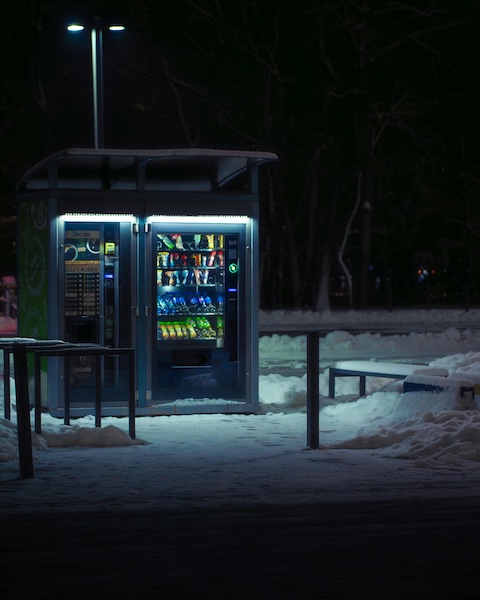
Next to the mushola, between a moss-covered trash bin and a drying rack full of faded underwear, stood a vending machine. It buzzed faintly, like it was breathing. It didn’t belong. Not here. Not in this alley that smelled like wet cloves and cheap detergent. It had no brand. No glass panel. Just a faint screen that pulsed pale green. It looked…old. Like a machine from the ‘90s, a relic misplaced by time—an artifact that didn’t understand how humans worked..
On the screen, one line blinked: “Choose what you’ve lost.”
Beny laughed. He was soaked, shoes squeaking, fingers tingling from holding his umbrella wrong. He thought maybe he was hallucinating. Lack of sleep. Too much kopi. But he took a step forward anyway. The ground squelched beneath him.
Inside his pocket was a folded rejection letter. The third this week. The journal hadn’t even spelled his name right. “Dear Mr. Bendy.” No comments. Just a polite but lifeless “not quite right for us.” He pulled the letter out, stared at it, then at the machine. He smirked, shoved the letter into the slot that looked like it was meant for coins, and whispered, “There. Take it.”
The machine shuddered. Whirred. Then it coughed — like a sick dog. Something dropped into the tray below. It was…a cassette tape. Wrapped in wax paper. No label. No markings. He stared. A full minute of dumb silence before he picked it up.
***
At home, his wife was asleep with their son curled under her arm. The fan squeaked. The power had gone out briefly while he was away — everything smelled of warm plastic. Beny dug through the bottom drawer of his old desk and found the Walkman he hadn’t touched since senior high school.
He popped the tape in. Pressed play. Static. Then a voice. “You still writing? Remember when we skipped Indonesian class just to buy five-thousand-rupiah chicken noodles?”
Beny froze. It was Septian. His best friend. Dead since 2017. Motorcycle accident. No warning. No funeral Beny could attend — he was in Surabaya for a job test he didn’t even pass.
The tape continued. Just fragments. Laughter. Jokes about their Bahasa Indonesia teacher’s wig. The sound of a distant bus honking. Then it ended.
Beny couldn’t move for minutes. He just sat there, the Walkman in his lap, the blue chair beneath him squeaking like it knew a secret.
***
The next night, he went back. Same alley. Same time: 00:03.
This time he brought something heavier. A photo. Blurry. Torn at the edge. His mother, smiling and holding a young Beny, who was crying about a balloon. She had died during childbirth — his younger sister didn’t make it either. He had no memory of her smile, only this image.
He hesitated. Then slid the photo in. The machine grumbled, louder this time. The screen flickered. Then another drop. A small plastic bag. Inside, a handkerchief. Pale blue. He opened it and the smell hit him. It was the same smell from his childhood — fried shallots and eucalyptus oil. It didn’t make sense. It shouldn’t exist. But it did. He cried, right there in the alley, in the stink of rain and detergent and mold. He didn’t care who saw. He sobbed so hard his chest cramped.
For weeks, he kept going. He fed the machine rejection letters. Old notebooks. A broken bracelet from a high school crush. A single strand of hair he found in his dad’s guitar case. Each time, the machine gave something back. Sounds. Scents. Pieces of people.
But then…things changed. The gifts started whispering. First just little echoes — his name in the static. A cough that sounded too real. Then one night, a black and white photo blinked at him. Actually blinked.
His wife started noticing things too. “You look pale,” she said.
“I’m just tired.”
“You said that yesterday.”
“And before yesterday,” their toddler added, not looking up from his toy car.
He was fading. Just a little. But enough. People forgot his coffee order. His boss called him “Benty.” Even his cat stopped sitting on his lap.
***
He didn’t write for a while. The blue chair stayed empty. The fan kept squeaking. Manuscripts gathered like dust in a folder labeled “ALMOST.” In a world that praised polished voices, his raw ones got shelved. Somewhere between the drafts and deletions, he began to wonder if editors wanted stories — or just echoes dressed up to sound like them.
One night, at 00:03, he stood in front of the machine with nothing in his hands. “I don’t want anything,” he told it. “I just want to be seen.”
The screen flickered violently. Then a message scrolled slowly: “Then stop feeding what forgets you.”
***
That night, he burned all the gifts. The tape. The handkerchief. Everything. The smell was awful — like regret and burnt sugar. He cried again. This time not from longing, but fear.
He thought the machine was giving him pieces of the past. But it wasn’t. It was taking him from the present — slice by slice. Until there would be nothing left but a name no one remembered, and a story never read.
Things That Don’t Come Back
By the time Beny realized he was “disappearing,” his presence had already started unraveling. People still saw him. But only halfway. Like something you’d notice from the corner of your eye — familiar, but not enough to matter.
He would speak, and people would squint as if his voice came from behind glass. He waved to his neighbor, Mr. Kholid, the one who always borrowed his lighter to smoke clove cigarettes on the porch. The old man just blinked through him like looking at fog.
His wife still spoke to him, but now in shorter sentences. Fewer smiles. Sometimes she’d stop in the middle of talking, confused, like she forgot who she was speaking to.
He watched himself fading — not dramatically, not with screaming or gasps — but slowly, like ink washing from an old receipt. Not gone. Just… unimportant.
***
On the third Thursday after the machine first appeared, Beny opened his laptop to write. But his fingers hovered. Words didn’t come. Not even the messy kind. He’d written through worse — fevers, heartbreak, bad wifi — but this was different. The screen looked like a wall, and his thoughts were like dust.
He scrolled through his old drafts. One had no title. Another had no ending. One was just 1,200 words about a girl who could “taste herself” in her lemon juice — he couldn’t remember writing it.
In one folder labeled “FINGERS CROSSED,” he found a story called “Midnight Vending Machine Mystique.” He’d written it months ago. Sent it to three publication journals. All rejections. One said it was “too abstract.” Another, “almost there, but too dreamlike to land emotionally.”
He read it again now. It felt… hollow. Like someone else had written it.
***
That night, the machine was waiting. It always was. Same place. Same hour. Like it never left. He stood in front of it with the manuscript in his hand. He didn’t know why. Maybe to bury the bad version. Maybe to test it. Maybe he wanted the machine to rewrite it for him, to give him something better, something finally worth reading.
He slid the printed story into the slot. The machine didn’t make a sound. It just lit up, bright and clear.
Then, the screen showed a new message: “You’re feeding yourself.”
A low whirr. Something clunked. Beny bent down to pick it up. It was a paper boat. Delicate. Yellowed.
On it, a sentence handwritten in ink: “We don’t disappear. We’re just misfiled.”
He stared at it. Felt like vomiting. Or laughing. Or screaming.
***
Later that night, the machine followed him. Not physically. It didn’t grow legs or roll through the kampung streets. But somehow, impossibly, it appeared again — outside his bedroom window at 00:03. Its hum echoed through the walls.
His son stirred in sleep. Beny turned on the lights. Opened the window. Nothing. But when he turned back, a piece of paper lay on his writing desk. His old story. But rewritten. Not by him. He read the first paragraph. Then the second. His skin turned cold. The words were right, almost poetic, but they weren’t his. They sounded like him — but cleaner, neater, emptier. Like someone had erased the fear, the mess, the stutters. Like it had been edited by someone who didn’t understand the shaking hands that wrote it.
The machine was offering him something else now. Perfection. Without the pain. Recognition, maybe. Without risk. But the cost was his voice.He told himself he would stop.
But the machine was clever. It didn’t ask. It just waited. Every night. At the edge of his sight. A green glow beneath the banana trees. A flicker in the reflection of a water puddle.
He knew if he fed it again, he wouldn’t come back. Not really.
***
A week passed.
His wife asked him if he was okay. He said yes, but she looked through him again. Not angry. Not sad. Just… indifferent. He wanted to scream. Instead, he sat down and wrote a list. Not a story. A list of everything he’d lost:
- My voice
- My friend Septian
- The smell of home
- The sound my mother made when cutting jahe
- My name
- My place at the dinner table
- My weird metaphors
- My son’s giggle when he saw me
- A rejection that said “almost”
- The old me that kept submitting anyway
He stared at the list until the ink bled into the page. Then he picked up a lighter.
***
He didn’t go to the machine that night. Or the night after. Instead, he sat on the floor. Not even in the blue chair. He held the list, burned its corner, then dropped it in a bowl. The ash curled like petals. He whispered: “You don’t get this!”
Not to the machine. To the part of him that had given up.
***
00:03. He opened his window just to check. Habit. The machine was not there. Only banana leaves. Still. Silent. He felt relief.
Then a knock at the front door. Slow. Hollow. Not human.
He stood. His legs didn’t want to. But he did. When he opened the door, nothing waited — nothing at all. Only an envelope. Plain. No name. Inside: a note. Typed.
“This machine does not forget. It waits. Even when you stop looking.”
Beny sat back down. The air was cold, even though it was the dry season. He stared at the note. And then, for the first time in weeks, he opened a blank document. And wrote.
Not to impress. Not to submit.
But because he had to. Because something in him still remembered what it felt like to be seen, even if only for a moment.
The Last Offering
Beny wrote like he was clawing his way back from a grave no one knew was there.
Words poured out — not neat or pretty. Some were spelled wrong. Some sentences broke in the middle and didn’t go anywhere. But they felt like his again. Ugly, trembling, desperate. Alive.
The story had no plan. No arc. It was just a man standing in front of a machine that swallowed his memories and returned them as lies. Sometimes the man cried. Sometimes he laughed. Sometimes he pressed his forehead against the humming box and whispered apologies to no one in particular.
He didn’t write it to submit. He wrote it because he was afraid of forgetting what it felt like to want something enough to hurt for it.
***
Outside, the night buzzed. Banana leaves rustled. The machine didn’t come. But he knew it was there. Waiting. Like unfinished grief.
That night, his son woke up crying. Night terror. Beny ran in, picked him up. Held him close.
“Papa here,” he said softly.
His son blinked, then frowned. “…Papa?”
That pause. That tiny beat. It stabbed deeper than anything the machine had ever given him. He held his son tighter. He wasn’t gone yet. But the thread was fraying.
***
The next day, he found the old rejection email again — the first one. The one with the typo. “Dear Mr. Deny…”
He printed it. Folded it. Then wrote a note on the back: “I still exist. You just didn’t see me.” He wasn’t asking to be accepted anymore. Just acknowledged. He went to the machine one last time.
***
00:03. The alley was quieter than usual. Like the kampung was holding its breath. The machine stood there. Its glow softer now. Almost apologetic. Beny stepped up to it.
He didn’t bring grief this time. Or longing. Or a piece of someone dead. He brought his own name. The one no one spelled right. The one even he’d started to forget.
He slipped the paper in. The machine didn’t hum. It sighed. Then spat something out gently. A photograph. Not old. Not faded. A picture of his blue chair. Empty.
And on it, a single line typed in soft gray ink: “If no one else remembers you, will you?”
***
The machine didn’t want grief. It wanted surrender. But Beny had already given it everything — except that. He tore the photo in half, then walked away.
***
Weeks passed with no sign of the machine.The alley returned to being just an alley — trash, moss, underwear drying like forgotten flags. Beny didn’t check anymore. Not because he didn’t care, but because he knew it could always come back.
It wasn’t gone. Just waiting for someone else. Someone too quiet. Too lost. Too invisible.
***
But not him. Not anymore.
He started submitting again. Slowly. He rewrote the vending machine story — again, but this time for himself. Raw, strange, jagged. With lines he didn’t know if anyone would understand. He added a duck that screamed at midnight. A neighbor who wore his dead wife’s perfume. A main character who never gave his name.
He got rejected again. Of course. One journal said, “Almost too weird.”
He smiled. Printed it. Taped it on the wall. Right next to the old one that said “There’s something alive here.”
Then he picked up his son, who now ran to him shouting, “Papa!” And sat back in the blue chair that still squeaked under his weight. And wrote.
Fendy S. Tulodo writes razor-edge stories about the fractures in the human soul. His characters claw through moral wastelands—rebels chasing redemption, power players toeing bloodstained lines. Every sentence dissects the raw nerves of choice when there are no clean hands left.
 ELEVENTH HOUR LITERARY