
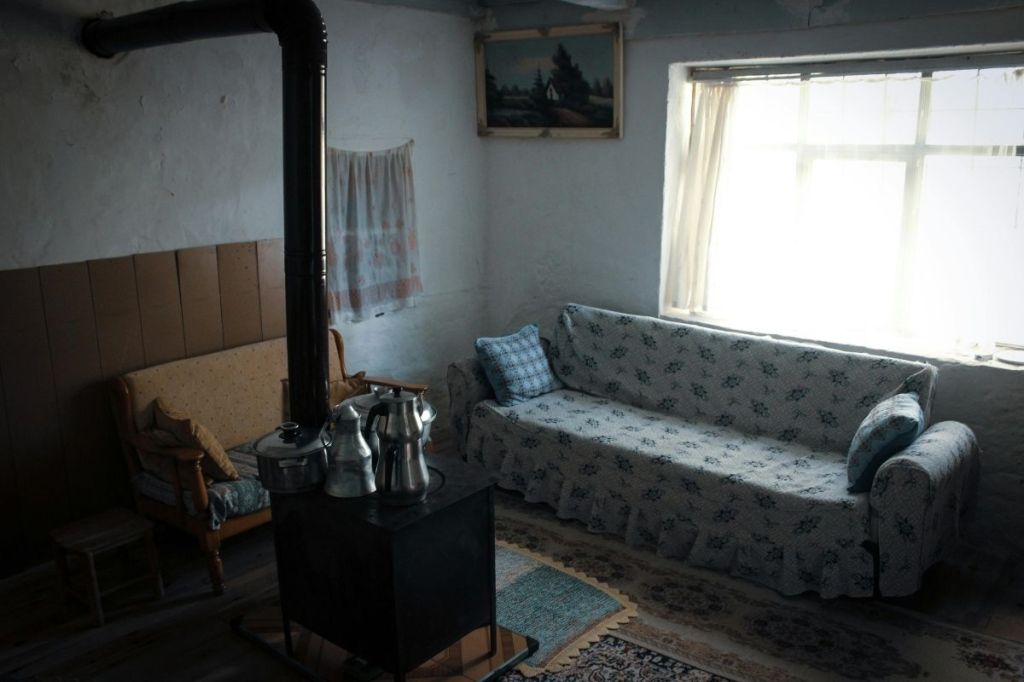
As far as I could tell, nobody had pulled down the attic ladder in years, maybe decades. Up there, mice had shredded insulation and ripped up boxes and torn into bags of wrapping paper.
My job: to crouch under the rafters and drag heavy tubes of carpet to the square in the attic floor. To drop them through. To gather chewed-up bags and drop those, too. Same for the shredded boxes and then boxes I didn’t bother to open: dropped. There were steamer trunks and small tables and chairs and furniture that I tried easing down, but I didn’t hold out hope. The stuff was heavy, and each piece landed hard. Bill had said not to worry about the floors, but I felt bad. The old woman who’d lived here had clearly cared for the place.
After a while, I went outside to catch the breeze. I dialed Bill and said, “This one’s gonna take a while,” and he didn’t respond, because I always said that. Then he said, “It’s all you, Rob,” which he always said.
I said it looked like the old woman had gotten up and gone out for the mail and never came back. A crossword book sat open on the kitchen table, and there were dishes in the sink. Dirty clothes in the hamper. She hadn’t made the bed. “Well,” I said, because there wasn’t much else. It seemed like a good time for a cigarette, but I didn’t smoke.
The yard looked freshly cut.
***
My university ran on a quarter system, which meant I didn’t get home till June, when summer jobs were in short supply. After freshman year, I worked for a late-night fast-food place that served drunks. I got to mop up their puke. After sophomore year, third shift at a hotel desk.
Now, this.
I worked nine to five. I was paid over minimum. I did a lot of boxing and lifting and hauling furniture up stairs and down, but none of it was terrible.
We worked for landlords with tenants who’d skipped out. We got hired by the families of hoarders. Surviving children called us because they needed Mom’s or Dad’s house emptied for sale.
It was a good job.
I couldn’t wait ‘till it was over.
***
Back inside, I considered what had come out of the attic and then considered it some more. It beat going up the ladder. The attic was like an oven. Waves of heat shimmered, and I pictured hell and black darkness and fire and sulfur, Satan in a red silk outfit. He stood on a bed of lava, holding an inflatable pitchfork that wilted as the old woman in the pictures here gave him a tongue lashing.
Then, because there was nothing to do but to do it, I went up again, and down, and up, and down with an end table. An ancient typewriter in its case. I kept one hand on the rungs, because the ladder was springy and trembled under my weight. Finally, only loose packing peanuts and flecks of Christmas tinsel and mouse droppings were left, and I went in search of a broom and dustpan.
In the bathrooms: a metric shit ton of bleach and sponges and buckets and scrub brushes dried stiff. No broom. I checked for a hand broom under the kitchen sink and found dishwasher tabs and metal polisher and more bleach and sponges and cleaner in green bottles, but no broom. In the front closet off the living room, two dusty vacuum cleaners and another vacuum cleaner in the hall closet. In what might have been a kids’ bedroom, there were dusters and Swiffers and a carpet cleaner but no broom.
The cleaning supplies I put in my hatchback. I would try to give some to my parents, some to my brother. I told myself to throw it out now, but I didn’t.
Nothing was getting tossed without a dumpster, so I got Kelly on the phone, and I said, “Tell me the dumpster’s on the way,” and she said, “Okay, Rob. The dumpster’s on its way.” I heard her stapler working. “This one’s a lot of work, Kelly,” I said, and she said, “They’re all a lot of work, Rob,” sigh implied. She waited long enough to avoid seeming mean and then said, “It’s a busy time.” She had another call. But the dumpster would be on site ASAP. She promised. She’d talk to me later, okay?
“Okay,” I said.
***
Bill had three regulars: himself; his driver, who had a license for the big trucks; and Kelly, who ran the office. The rest of us, the guys getting their hands dirty, were seasonal or temporary.
The rentals stank of cigarettes. The floors were covered with clothes and toys and magazines and empty bottles and cans. The carpets were threadbare. Kitchen sinks were piled with dirty dishes. Shower curtains were moldy. Everything in those places got pitched in the dumpster.
Hoarders’ houses had paths between the stacks of old mail on top of books on top of newspapers on top of old electronics and videotapes and canned goods and pillows and clothes on top of the furniture. I found dead mice and rats. I found bugs and feces. I made Bill buy me thick leather gloves and a commercial grade respirator, and he didn’t argue.
The houses of people who’d died. There were walkers left mid-room. Support bars around toilets and in showers. Dressers covered in plastic pill organizers. Shelves of adult diapers. Sunken sofas and chairs. Old, box TVs set at top volume. In the attics and closets and basements: sentimental stuff that had accumulated and been arranged and stored. Nobody wanted any of it anymore. Those houses bothered me most.
***
After lunch, I took stock of what we’d load on the truck.
The kitchen table and the coffee table and end tables would sell. The bedframes. The office desk. Wood chairs. Bookshelves. Dressers, once they’d been emptied. There was cookware under the counters and tools from the garage and an ancient lawnmower, an older snowblower. There was a croquet set. Every house had a croquet set.
For the dumpster? The luggage in the closets was mildew-spotted. Same for the clothes folded neatly in chests and the shoes with peeling leather. A soft guitar case with no guitar. All of it would get tossed along with ancient paint cans and a rusting file cabinet and shelves of board games, a broken dollhouse and cracked bins of yarn and knitting needles.
The sofa.
It was a nice one, and I imagined the old woman and her husband visiting stores, testing sofas by sitting and settling and, because it was a big purchase, even stretching out. Then, flipping through swatches and slipcovers and signing on the dotted line, delivery in a week, after which it saw two decades of kids and then more years of pets and guests and then more and more of the old woman’s old husband, who claimed it as his napping spot.
After he died, nothing, because the old woman preferred the recliner surrounded by bags of yarn and half-finished knitting, and the sofa was still in good shape, and I was going to send it to the dump, because nobody bought old sofas, full stop.
When I called my mom, she said, “Just no,” before I said a word. “We don’t need it, and no one we know needs it.”
***
Mom was losing patience, and not with my calls about junk.
I’d been driving her and Dad crazy for a lot of years.
In high school, I did what was asked and nothing more. The rest of the time, I played video games. I hung out with Kirk and Kris, both with a K, who parted their hair in the middle and smoked pot morning, noon, and night. When they weren’t smoking pot, they talked about smoking pot. They worked at an off-brand taco joint so they could buy pot. It was a miracle I made it into college.
Now, in college, I had an apartment. I was taking classes that guaranteed unemployment.
My parents agreed that a well-rounded person studies literature and philosophy and even art history, but maybe just one course in each?
Maybe I could double major, with one major leading somewhere?
My parents said I needed a plan.
Did I want to work summer jobs the rest of my life?
They didn’t say after college I was on my own. It was just the way of things.
***
I grabbed a box and cleared the old woman’s desk. There were letters from social security and the state benefits office and an insurance agency and two banks and the garbage service and landscapers and the local paper. There were personal letters in envelopes neatly sliced open. In the drawers, folders with tax returns, ten, twenty years old. Legal papers. Every bit would get dumped in the shredder at the office.
I read the personal letters, because who wouldn’t. They were in shaky ink. They were about children and grandchildren.
Then, more for the garbage can, tape and rubber bands and paper clips and dried up pens and old ink pads and cheap paperweights and old pennies and nickels.
When I went to wash my hands in the hall bathroom, a sheet of paper in the sink said, “DO NOT USE,” so I didn’t, I went to the kitchen, where there should have been a second sign, given how the sink drained. Rings lined where dirty water had backed up and sat. On the stove, next to the sink, a layer of grime, and, in the fridge, hardened spills. There was food, eggs and bacon and butter, a loaf of bread, cheese, apples, which I guessed you could live on, but who would want to, and it made me wonder who was taking care of the old woman.
Two empty dog bowls sat off to one side, but there was no dog food anywhere and no dog.
Pot after pan after pot had been stuffed in the cabinets, everything dinged and scratched and stained. The coated pans weren’t coated anymore. The Tupperware drawer was jammed. In the cupboards, coffee cups were stacked six deep. The pantry had three dusty coffee makers.
***
“Kelly,” I said to her voicemail, “the dumpster.”
“By end of day,” she said, picking up.
“Kelly,” I said.
“Rob,” she said.
“Our front, please,” I said. “Tell them in the driveway, as close as they can.”
“That I can do,” she said, and I went out for some more fresh air and wondered when the patio had last been swept.
***
My parents could have written a manual. College, marriage, kids. Disney, t-ball, school band. Lawn care, birthday parties, camping. Concern about the cost of college. Concern about retirement.
A lot of TV.
They seemed happy.
I hadn’t been unhappy, as a kid.
I didn’t want that life, though.
***
In the basement, the washer and dryer. They would sell.
Bookshelf after bookshelf. Every last hardcover and paperback for the dumpster. No one would want them. Same for the crumbling old board games. Same for tote after tote of scratched slides. Cassette tapes and albums that smelled like cat piss. Cans full of dried paint. Folding chairs not worth cleaning. A tan microwave with a dial on the front. Goodwill would take some of it, if we wanted, but they’d throw out most of what they took.
The dollhouse against one wall was solid wood with hinged front walls and perfect, tiny furniture, but it had gone to mold. The bed frame against another wall had rusted. There was a small box filled with keys. Cracked plastic bins with yarn and knitting needles leaned against rolls of fabric on a sewing table. Maybe the sewing table could be saved.
I went up.
***
I’d checked the garage first. I’d been caught before, finishing a house to find its garage stuffed from floor to ceiling, no room for cars or a car or even a twenty-year old man of average height and weight hired to come in and clear. This one would be easy. There were the tools on shelves. The lawnmower, snowblower. There were golf clubs. The damn croquet set.
There’d been a car. There were tracks, a smell. It was gone, taken by the old woman’s kids.
They’d taken paintings, too, leaving clean squares on the walls. They’d taken jewelry but not the jewelry box, which sat empty on a dresser. If there were family photos, they’d taken those, because I hadn’t seen a single framed picture of a grandchild or a photo album. I was grateful for that. I didn’t like throwing those away. It was hard enough clearing away a dozen notes the old woman had written herself, reminders to take out the trash, to bring in the mail, to take out the trash, to bring in the mail. A yellow sheet of phone numbers on the fridge. Year-old grocery receipts. Now, I was taking the old woman’s calendar off the wall. It had each passing day carefully x’ed out, until it didn’t.
***
My own grandparents went missing, one by one. I wasn’t clear about my dad’s parents, who lived further away. Dad made one trip when I was small, when his father died. He made a few more when his mom died, and that was it.
Mom’s parents were closer. First, her dad went into a facility. Then, we were at his funeral. Grandma, she’d gone the way of this old woman, staying home, against all reason, until.
Now, all I could wonder was what happened to her stuff. I didn’t remember Mom bringing anything home. I couldn’t remember Mom selling the house. When I asked, Mom didn’t really remember either, not much, she said. She said her sisters took some stuff. Somebody bought the house.
***
“Kelly,” I said.
“On its way,” she said. A second phone rang near her. A door opened, closed. “I just called again.”
“Kelly,” I said.
“I just called,” she said.
“I’m gonna go out and wait,” I said.
She laughed. “You probably should,” she said. “I’m telling you. It’s literally on its way.”
***
But I didn’t. I wandered the house, imagining it full, music coming from the bedrooms. I could hear a TV in the living room and a dog barking. Someone was taking too long in the bathroom, and, in the kitchen, clatter. A bagel heating in the toaster oven.
I stopped in the old woman’s bedroom, where the bed had been made, sort of, the top cover pulled up but not straightened. The mattress dipped on the side next to a night table. On the night table, glasses, a comb, a book.
I was dirty, but what did it matter? I kicked off my shoes and stretched out and smelled soap, and I wondered about the woman, if she’d grown up around here. I wondered if she’d been good in school, if she’d had friends, if she’d gone to college or had been born too soon. Maybe she went anyway. Maybe she’d been pushed to marry. To just marry.
I knew she liked knitting and reading. Or maybe she didn’t. Maybe those were things one does. The same for cooking. Maybe she liked her husband, her kids, her life. Maybe she didn’t.
I wondered how she liked being alone. It was clear she’d been alone a lot over the years. Maybe that was good, or at least fine. Maybe it wasn’t.
It had been a long day, and I felt like closing my eyes. But I didn’t. I lay there a while staring up at the ceiling, fine cobwebs only visible from this angle.
Then it was time to get up.
***
Out front, I looked over the chipped concrete slabs leading to the front steps and the metal railings, which had come loose. Shattered pieces of slate covered the landing.
A gutter hung by the grace of a single screw, and the gardening shed by the side of the house had a rough hole along its back wall. Behind it, landscapers had piled wet leaves.
I popped the lid of a Charles Chips can to find birdseed and imagined the old woman sitting, watching the birds.
Me, I watched cars appear and disappear at a curve further down the street, and I kept imagining the sound of a big truck hauling a dumpster, to let me get on with things, and I kept hearing it and hearing it around that turn, the sun still hot and some day left, and I knew it would be next, and then next. Next one.
Matthew Roberson is the author of four novels—1998.6, Impotent, List, and the recently published campus novel Interim. He also edited the collection Musing the Mosaic: Approaches to Ronald Sukenick. His short fiction has appeared in Fourteen Hills, Fiction International, Clackamas Literary Review, Western Humanities Review, Notre Dame Review, McSweeney’s Internet Tendency, and others. He lives and teaches in central Michigan, where he also directs the CMICH Press Summit Series.
 ELEVENTH HOUR LITERARY