
When Eve turned forty, she’d braced for an onslaught of physiological changes. The cracked teeth and hardened arteries. Withered bones and shedding hair. Eventually, at seventy, eighty, or — if lucky — well into her nineties, her body would collapse like a building to a wrecking ball. What she hadn’t prepared for was the change to her mental capacity. A second puberty that sloughed cells from her brain instead of her uterus. She’d forgotten the names of high school teachers and how to count in French, the hair color of the first boy she kissed, and, more pressingly, the location of the batting gloves she’d purchased for Matthew’s little league season, which was starting next week.
In the clearing formerly occupied by relevant data, existential questions sprouted like weeds: Why am I alive? What is my purpose? What is life? Answers arrived unexpectedly. In the shower. On the treadmill. That morning, while she prepared Matthew’s lunch — the previous day’s sandwich still in its container, the cookie bag empty, of course. As she dumped the sandwich into the compost bin, she thought: Life is a series of discards.
A short while later, Eve dropped Matthew at school and watched him join the throng at the doors. He was a reasonably tall, reasonably weighted eleven-year-old among other kids of his age, height and reasonableness. Shy with his peers, although he’d played with several of them as a baby — well, more like rolled next to — when Eve had been in a group of first-time mothers, who traded stories about sleepless nights and missing sex drives. The group thinned when women returned to work or prepared for child number two. There’d been half-hearted attempts to schedule coffee. Superficial greetings at school events. The Others. That’s what Eve called them now. But only in secret, of course.
As she pulled out of the school lot, she stifled a yawn. Where had she been planning to go next? Oh yes, the grocery store. Brain fog, her yoga teacher called it. Normal for women her age. And yet, the Others didn’t seem to have this problem. Not the Women with a Purpose, blowing kisses through car windows as they sped to a meeting. Or the Giving Women with their broad smiles, passing out flyers for PTA meetings, “All welcome.” Or the Stylish Women in designer jeans and boots, subtly reapplying lip-liners so as never to be seen without.
As she passed a familiar ranch house, she felt the tug to pull over. Muscle memory. She hadn’t been inside Carla’s for over a year but could still picture the wicker basket with loose keys and mail; the towels in the half-bath, one of those colorless colors, beige or ecru; the glass jars in the kitchen displaying dried pasta in various shapes and sizes. What a surprise — a shock really — to discover Carla and Richard’s marriage had been equally brittle. A cicada shell that revealed its hollowness under the pressure of a misdirected step. (That step had been taken by Richard when he moved in with his secretary.) Eve had stood by during Carla’s time of need, offering tissues and a shoulder. Pretending not to notice her friend’s grubby bathrobe, the wild expression of a creature unexpectedly released from its pack. But then Carla got a therapist. She switched gyms. And, with no explanation, dropped Eve’s outstretched hand.
Suddenly, the store. Eve’s turn signal flickered with the spin of tires. She offered a conciliatory wave at the driver behind her as he blasted his horn. Inside, icy air and Muzak, the co-mingling smells of detergent and fresh-baked rolls. She placed kale and apples in her cart. Pasta sauce. A loaf of bread. She compared the prices for eggs and grabbed the cheapest. Same for the milk. In the chip aisle, she paused; Matthew had scribbled on the shopping list Fun food please! In a way, potato chips were discarded friends from her past. Or at least a substitute. This, from her teenage years. Saturday nights in the company of TV voices and the chip bag’s salty breath. She grabbed a bag of pretzels. Pushed the cart onward. Stopped again. A tall woman with sharp features and a stylish bob blocked the other end of the aisle. Eve retreated, but the woman reappeared at the end of the next aisle. They stopped short to keep from crashing carts near the one open register.
“You first.” The woman tilted her head toward a rack of gossip magazines. “I like to read the headlines. Guilty pleasure.” She motioned to the wine bottle in Eve’s cart. “We all gotta have ‘em.”
The woman’s voice was deep and confident with the rasp of someone who might sneak a cigarette every now and then.
Eve flickered a smile then placed her items on the belt. The wine was intended for a party of one; Jason had to work late. Again.
“Have a nice day,” Eve said to the dour cashier as she took her bags.
“You too!” the other shopper replied.
In the car, Eve discovered she hadn’t received the sale price for the apples. Normally she checked the receipt at the counter. An apologetic, “things are tight,” when requesting a correction. The exchange with the woman had cost her two dollars. Oh well. At least it shook up the routine.
Eve made up for the loss the next morning at the office when she pocketed one of the fancy pens that Jason liked. A perk of her part-time position as assistant to Mr. B — an octogenarian who’d made his fortune in orthopedic insoles. Three days a week, she managed his calendar and light travel, but her main responsibility was to screen the donation requests that streamed in from humanitarian organizations and other charities with the requisite 501c3. A night owl, he often arrived after she’d gone home, so she’d leave them for his review. They’d reappear on her desk with scrawled notes. Yes. No. Give half. Truth was, she could do her job in half the time. She’d learned to pace herself. Sometimes personal appeals arrived in the mail with handwritten notes addressed Dear Sir. Carol is a single mother with cancer and no insurance; Javier was the victim of gun violence; A hurricane took our home. Mr. B’s foundation couldn’t fund individuals so Eve never passed the letters along, but she read each one as if the mere act of attentiveness might benefit the subject’s well-being.
Often, the letters included a photo of the subject peering from a hospital bed, near a disaster site, or even more poignant, clear-eyed and active, before tragedy struck. Tears pricked her eyes — lately, she couldn’t stop them — as she’d wonder why these people? People who cared for pets and smiled at the mailman, who paid their taxes, and pulled to the side of the road. Why did they only get half a life? Then the next logical question. Given that Eve appeared to be one of the lucky ones, charting her way through life’s minefield relatively unscathed, who was she to question the gift she’d been given? How could she not embrace each peripatetic moment? Each breath of fresh air?
Matthew’s baseball team won their first game of the season. Eve was folding laundry when he bounded into the bedroom.
“Four runs! Four runs off my hit. That’s a Grand Slam!” His excitement radiated like colored beams of light.
Jason followed behind. His smile loosened the worry lines around his eyes. “Coach is calling him The Slugger.” He picked up a sock ball and pitched it to Matthew’s outstretched hand.
“Wow, way to go!” she said. She lined the cuffs on a pair of jeans. Folded the fabric into thirds.
As the sock ball flew overhead and Jason chanted “Slugger, Slugger,” she remembered when she’d been the favored parent. Filling the hours while Jason was at work making things that could be destroyed. Pillow forts. Lego sets. And Matthew’s favorite, folded airplanes, which they’d battle with until the floor became a sea of crushed paper. In a box of memorabilia, she’d stored one made from yellow construction paper with shaky writing that declared, Mommy Rules.
Matthew jumped on the bed, setting off an avalanche of folded clothes.
“Out you go,” she commanded. Jason tossed the sock ball in Eve’s general direction. Their laughter trailed as they disappeared through the door and Eve bent to collect the scattered clothes.
One morning after drop off, Eve spotted the woman from the store in a slow-moving line at Starbucks. She averted her eyes, but the woman shouted, “Hey, there you are,” and motioned for Eve to cut in line. A suited man glared as he stepped aside to make room.
“Sorry,” the woman said. “This is my friend. I was going to order for her anyway.”
The woman typed on her phone and handed it to Eve. A text box read: I’m Louise. Name and coffee? Eve typed and handed the phone back.
“I’ll have a soy macchiato,” Louise told the barista. “And a skim latte for my friend, Eve.” Eve took out her wallet, but Louise shooed her away.
“Why don’t you find us a table?”
Over coffee, Eve learned that Louise had recently moved up from Chicago to put her fifteen-year-old son, Rowan, into a better school. Louise’s husband stayed downtown on weeknights in corporate housing. “No loss, he’s a bore when he’s working.” She liked the trees but missed the city energy. When Eve mentioned she’d grown up out East, Louise slapped the table. “I could tell you were a New Yorker.” Eve didn’t bother to clarify she’d meant Baltimore.
“We’ll do this again,” Louise said, as they traded phone numbers. “I haven’t met a single interesting person here.” She rested her hand on Eve’s shoulder. “Until now.”
A few days later, Eve sat in Louise’s landscaped yard with her feet dipped in the kidney-shaped swimming pool. Although the pool wasn’t heated and had a hazy film on top, the water hid the yellow tint of Eve’s pedicure-less nails. (Louise’s toes, splayed on the end of a chaise lounge, were impeccable.) Eve sipped her second glass of chardonnay; Matthew had an afterschool baseball practice, and she figured she’d be sober by pick-up. She and Louise had already touched on politics — “We are not going back,” Louise declared — and had been discussing the trials of raising sons. Louise lost a bit of her smile when she shared that Rowan had been kicked out of his previous school and had been seeing a therapist. Eve hoped she wasn’t too bold when she asked if Louise saw someone too.
Louise waved her glass as if to swat away the question. “I just check the mirror. If I look glum I go shopping or to the gym. Call me shallow but as long as the surface is clear, I see no need to deal with some fifty-pound raccoon drowned below.”
Eve reflexively pulled her feet from the water.
Louise chortled. “Don’t be silly. I didn’t mean a fifty-pound raccoon had drowned here.” She waited a beat. “It was probably thirty at most.”
They laughed the type of laugh that came from a wine-filled afternoon. Eve dipped her feet back in, relishing the warmth of the sun, the alcohol buzz, and the flow of raccoon-less (ha!) water between her toes. Even with the alcohol, Eve felt more alert than she had in months. Maybe age wasn’t the issue, after all. Maybe all she needed to steer free of the fog was a bright, friendly face as a guide.
Over the next few weeks, on non-work days, Eve put off laundry and other household chores to meet Louise for an early movie or an alcohol-infused lunch. “A Bloody Mary,” Louise explained, “makes a perfectly acceptable side vegetable.” The waitresses seemed extra attentive to Louise, as if she were a celebrity in their midst. They were nice to Eve too, and Eve wondered if some of Louise’s charisma might cling to her, the way a whiff of perfume stayed on her clothes after Louise greeted her with a hug.
One afternoon Eve followed her friend into an expensive boutique — the type of place where Eve had only ever window-shopped — and watched Louise parade evening gowns for a black-tie event at her husband’s firm.
“Well?” Louise asked, her svelte frame sheathed in black silk.
“You seriously have no flaws.”
“Of course, I do.” Louise shook her toned arms, setting off the smallest of jiggles.
Eve returned a skeptical look.
Louise smiled. “Well, I do have several cavities.”
As Louise paid for the dress, Eve tried on sunglasses. She wondered how it would feel to hand one over to the cashier without even looking at the price. She and Jason have been keeping a tight budget, squirreling away what they could for Matthew’s eventual SAT prep classes and college tuition. A day earlier, they’d received notice of a property tax hike, even though their house was the smallest on a block that was already a step down from surrounding streets. “You wanted a suburb near the lake,” Jason said, as if he hadn’t gloated about the location to his landlocked family in southern Illinois.
Eve knew Louise’s life wasn’t perfect. Louise complained of boredom and had asked Eve to keep an eye out for any vacancies at auxiliary boards for nonprofits. Eve had yet to meet Louise’s husband, but one afternoon, as she waited by the pool for Louise to return with the wine, a teen boy with shaggy black hair and combat boots jumped the fence.
“Who are you?” he demanded. He spoke in a British accent that seemed performative. Shocked, Eve replied, “Who are you?”
He ignored her and strolled into the house. Eve heard Louise yell, “You’re going back to school right now, Rowan. Do you hear me?”
Eve picked up her purse and left through the gate. Sorry, had to run, she texted. They never mentioned it again.
Louise called one afternoon to chat while Eve was at the office sorting the most recent batch of donation requests. A stack of rejected letters lay face down. A gold logo topped the smaller pile of ‘maybes.’ She unfolded the next letter while Louise launched into a complaint about tulips her husband brought home — “half dead, like they’d been in his car for days” — but Eve didn’t catch what Louise said next. A photo tumbled from the letter of a baseball-capped, brown-haired boy. Matthew! Of course, it wasn’t, but the resemblance was undeniable. Eve scanned the body of the note. A group of neighbors wanted to raise the spirits of a terminally ill child named Wyatt, a lifelong Cubs fan. They hoped Mr. B. would fund tickets and transportation for the boy to attend some games. Help him meet an idol or two.
Eve gave the image a closer look. Clearly it was a different child, but the smile and dimpled cheeks were so very Matthew-like. At night, she’d often creep into his room while he slept to kiss those soft indentations, thinking how are you even real? Did Wyatt’s mother do the same? Did she let herself think about the night she’d come in to find an empty bed, her kisses meeting air?
Louise paused. “Are you there?”
Choking back tears, Eve read the letter.
“Oh, that’s so sad.”
“Yes. But I can’t pass it along.” She took a tissue and blew her nose.
“Hey, let me help with this! My husband’s always bragging he can get tickets for anything through the firm. Bring the letter over. The other ones too. I can fundraise.”
After they hung up, Eve allowed herself to fantasize about a picture in the daily paper. Louise standing behind Wyatt and his family. Cubs hats and grins on a sunny baseball-perfect day. She slid the rejected letters into a manila folder, feeling as if she’d granted each and every one a reprieve.
When Jason asked about Eve’s day, she’d answer, “I had coffee with a mom,” or “I met someone for lunch,” or “I talked to a person about the high school.” She didn’t feel the need to share that the mom, lunch date and school rep were one and the same. Louise insisted on paying for the outings, so it wasn’t like she had to justify the cost. And yet, her daytime drinking wasn’t without consequence. The fogginess she’d experienced before meeting Louise had evolved into the daze of a mild but chronic hangover. She forgot to pack Matthew’s cookies one day. Twice, she had to circle back for her phone. So, it didn’t surprise as much as alarm her when she returned from work one Friday to discover she still had the event tickets she was supposed to deliver to Mr. B’s house. The panel discussion — A Jew, a Catholic, and a Muslim walk into a bar…and build a bridge to Peace — had been made possible in part due to Mr. B’s support. She called him in the fluttery panic of a mistake made but not yet rectified. After telling Eve he’d been planning to skip it, he suggested she go instead. Jason was at Matthew’s game, so she called Louise, who responded, “I might be welcoming a horny husband tonight, no can do.”
Although it seemed impulsive, Eve put on a clean blouse, raced downtown, and made it into the auditorium as the house lights dimmed and the speakers — two men in suits and a woman in a hijab — took the stage. At the reception afterward, Eve joined the circle of mostly women that formed around the female panelist.
“Did you know,” the panelist asked, “that in the nineteenth century, the lifespan of U.S. women was only 43 years?”
The group shook their heads. Most were Eve’s age or older. Their names adorned the back of the program that Eve clasped in her damp fist. She, so clearly an outsider. The panelist continued. “As Western women, you’re now expected to live to at least eighty. Think of how much time that gives you to effect real change in the world.” The speaker caught Eve’s eye. “So, ask yourself, what are you going to do with your second life?”
Louise called during dinner on a rare night that Jason had made it home. When Eve didn’t answer, Louise texted Need to talk! and called again. Eve, with a stab of irritation, texted, I need a few min. Truthfully, that’s all it took for Matthew to finish his second helping of mashed potatoes, scrape back his chair, and grab his backpack. Eve’s rule: homework before computer games.
“I’ve got the dishes,” Jason offered.
“I’ll take the trash.” Eve picked up her phone and carried the bag out the back door. To save money, they’d skipped the annual yard service, and the ground was a mucky swamp of leaves and dead grass. Eve paused to dial. Last week, Louise mentioned she would be working on the donation. Eve wondered if there might be good news about Wyatt. Money raised! Tickets procured!
Louise answered mid-sentence, as if she’d been conversing with Eve offline. “Should I?” Eve asked her to start over. Apparently, Rowan had locked himself in his room and was blasting music loud enough to make the windows rattle. Eve could hear the thump of bass through the phone.
“Do you think I should bribe him with a beer? Just to get him out?”
“Wow, I don’t know.” Eve paused at the stairs and pulled a dead leaf from the railing. She had no idea about the challenges that lay ahead. “I’m sure whatever you decide will be fine.”
After Louise hung up, Eve felt overcome by the urge to hug her family — although surely Matthew would squirm away — but all that greeted her when she walked inside were pushed-back chairs and dirty dishes stacked in the sink.
By late spring, Louise stopped suggesting they eat out. She claimed to prefer the quiet of home, but Eve thought Louise wanted to deter Rowan from sneaking in during the school day.
One rainy afternoon, they sat in the den as Louise repined about unfair work expectations. Her husband had had to stay in the city three weekends in a row.
“At least I’ll see him at the company dinner. They’re such a bore, but it’s the wifely thing to do. Plus, he’s taking Rowan to a Cubs game next week. Good for them to have bonding time.”
Louise topped off her glass. “You’re drinking slow.”
Eve took a sip. Louise claimed vodka was better for bathing suit season, but she made a strong drink. “Any luck with that ticket donation?”
Louise took a heftier draw. “He’s been busy with work, but I’ll ask again.” She fanned herself with a catalogue. “Is it hot in here or is it just me?”
That night, Eve helped Matthew with an end-of-year science project that involved toothpicks, glue, and most of the printer ink. She washed dishes. She searched for Matthew’s baseball glove — how did it wind up in the towel closet? — and waved it as she wished him “sweet dreams.” From the kitchen, the microwave whirred as Jason, home at last, reheated dinner.
Finally, in bed and with no other reason for delay, she opened her laptop and searched for Wyatt’s fundraising page. She read as far as We regret to inform you and shut the screen. Surely, the neighbors sent other letters. Someone else might have stepped up. The next thought entered uninvited: a stinging insect finding a hole in the screen. What difference did it make? The boy was gone. The games continued. A voice she hadn’t heard in a while added: Isn’t life meaningless?
Matthew’s team had a tournament in Milwaukee the same weekend as Louise’s black-tie dinner. Jason and Matthew double-checked Matthew’s gear bag as they prepared to head out. Around their necks dangled laminated name tags. Matthew’s read, Hello, I’m The Slugger. Jason’s read, Hello, I’m The Slugger’s Dad.
As Jason loaded the car, Eve hugged Matthew. “Try to have fun, sweetie.” She turned to hug Jason, but he’d already climbed in. “Call when you can,” she said and watched them pull away.
Inside, Eve sensed the fog approach, ready to engulf the empty weekend. She grabbed her keys. If she hurried, she might make it to Louise’s in time for a pre-event drink. She hadn’t been over since their conversation about the tickets and had been abrupt the last time they spoke on the phone. She’d apologize. Blame it on work and the end-of-school craziness. She rang the bell. After a few minutes, Louise appeared, dressed in the purchased gown but barefoot. She swayed as she stepped back.
“I’m so glad you stopped by. I was just fixing a drink.”
“I’m glad I got here in time.”
In the kitchen, Louise picked up a bottle and sloshed brown liquid into a glass.
“Haven’t you had enough?” Rowan spoke from the doorway. The accent made him sound like a butler chastising an inebriated duchess.
Louise snorted. “Kids are such know-it-alls. I plan to get thoroughly drunk. Deal with it!” The kitchen smelled overripe. Dishes littered the countertops.
“What happened to your cleaning lady?” Eve asked. “And aren’t you headed to the dinner?”
“Nope, quit,” Louise said.
“Your husband quit?” Eve surveyed the room, as if a man might lurch from the shadows.
“No, Patricia quit when she discovered my budget didn’t cover weekly maid service.” Louise wobbled, grabbed the side of the island for support.
Eve came closer. “You know, maybe you have had enough.”
“Screw that.” Louise slid the glass toward Eve. “Drink with me.”
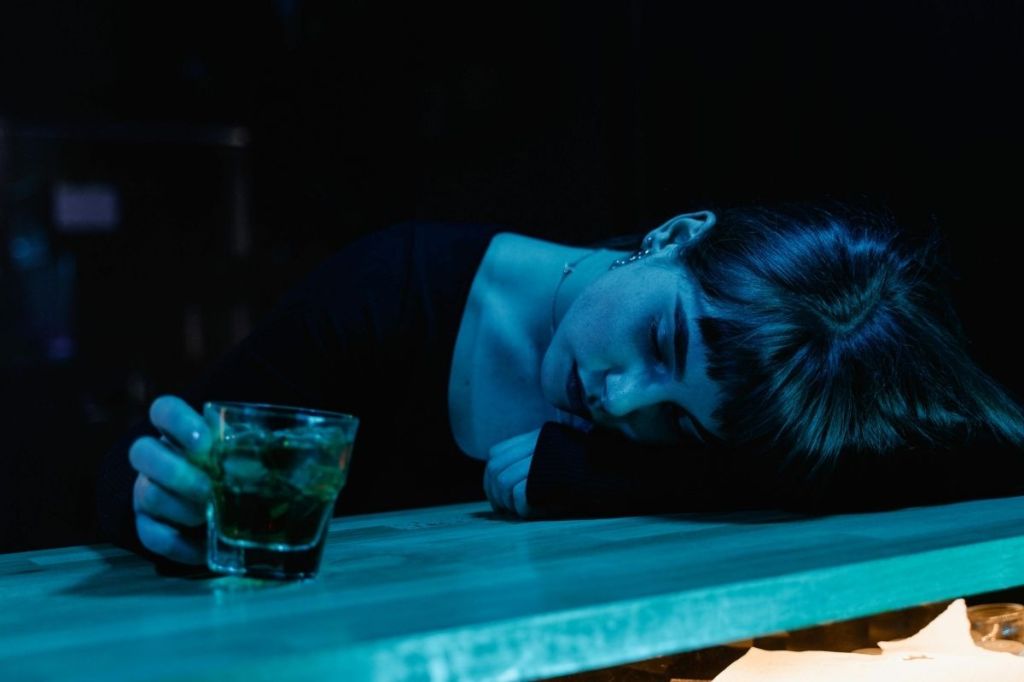
Eve took a small sip and passed the glass back. The scotch burned going down. A strap slid from Louise’s shoulder and there was something about her expression, something more than the booze. Eve had seen that look before.
“You’re not going to the dinner.”
Louise waved the glass. “Apparently, my husband has another date.”
The glass slipped and shattered. Louise sank to the floor. Eve rushed over, but Rowan got there first.
“Leave her alone. Don’t you think you’ve done enough?”
“What do you mean?” Eve asked.
“Some friend you are. You’re nothing but an enabler.”
Rowan was stronger than his frame suggested. He lifted Louise, carried her to the living room, and placed her gently on the couch. She mumbled as he draped her in a blanket. Eve stood in the doorway.
“Please let me help.”
Rowan slouched past. “Just fucking leave.”
Instead, Eve wandered the rooms. She saw empty bottles in the den and bedroom and lining the tub. Had she been so blinded by her need for friendship that she’d missed the signs of Louise’s problems? In the kitchen, she swept the glass into a dustpan and carried it to the trash. She spotted the folder of donation requests under a thick pile of mail on the counter. Tugged it free. On her way to the front door, she noticed the sliding door ajar and changed course. Rowan sat in Louise’s chair by the pool. Eve sank onto the cement, not far from where she’d sat on her first visit.
“How long has she known?”
“Since before we moved.” He tossed a pebble into the pool. It plinked when it hit the water. “She’s been in denial but guess there’s no escaping it now. Dad waited until today to tell her not to show up. And he’s cut her funds. We’ll probably have to move again.”
A plane droned overhead. Cicadas clicked. A lilac bush saturated the air with its cloying sweetness. Eve thought of another summer night, a few years back, Matthew in tears after Jason got stuck late at work and missed Matthew’s last T-ball game. She’d grabbed a ream of paper, and they’d sat outside and made airplanes until her knuckles ached and Matthew’s smile returned.
Eve opened the folder. “Ever make a paper airplane?” She creased a sheet, set it aloft. It crashed at Rowan’s feet. He didn’t respond but also didn’t leave. She split the pile and set half at his side.
He folded a plane and coasted it into the pool. “In the event of a water landing.”
They continued in silence. Eve’s fingers were nimble. Soon she was surrounded by a fleet of airplanes listing in the breeze, like thin white flags. The top letter, Wyatt’s, she’d saved for last. Her fingers brushed the image. In the faded light, it could be anyone’s photo: Matthew’s, Louise’s, or even her own. The panelist’s voice came to her in a chant. What will you do? Eve hadn’t made a difference. Not yet. But how lucky she was — so very, very lucky — to have been granted a whole second life to try.
Folding back the paper wings, Eve tilted the airplane toward the clouds. “Safe travels,” she said and let go.
Marcie Roman‘s work has appeared in On the Premises, Toronto Journal, Driftwood, CALYX, Split Lip, Black Fox, and The Gravity of the Thing, among others, and nationwide in Short Edition story dispensers. Her debut novel was named a 2022 Foreword INDIE Book of the Year. She is a fiction editor for The Baltimore Review and earned an MFA from Vermont College of Fine Arts. Online, she can be found at marcieroman.com. She is thrilled that “Half Life” has found a home at Eleventh Hour.
 ELEVENTH HOUR LITERARY