
We stood in our driveway between houses and watched a moving van and a sedan pull up. I smiled, apprehensive, squinting into the morning sun. A man in a polo shirt with a logo waved at us as he unlocked the back of the van: what appeared to be the contents of a carton of books slid into the driveway. Our neighborhood was quiet, sedate even, higher-end, I suppose — it had more retirees than kids but an excellent school system as well. We’d moved here three years earlier, after Jay was promoted at work. In that time, we’d said hello to our former next-door neighbors exactly six times. I didn’t have much hope for the new buyers: the house had sold for market-boom money — so much more than we’d expected. Great, Jay had said, rich people. Gentrify Utica.
I didn’t point out that we too might’ve been considered part of the gentry.
The car doors popped open as the sky hazed pink. I noted that another neighbor — the house across the street — had invested in synthetic lawn. There was a sound of pitched laughter. Then children. A match, it appeared, for ours. One girl named Daphne for our Berry and one boy named Hugo for our Trent. Jay and Reynard, the husbands, shook two-handed. Jay looked a little rumpled next to sleek Reynard in stripes and linen. Gripping Olivia’s hand, I felt an almost electrical beat.
“You’ve got children!” I stated the obvious when I was nervous.
She laughed. “Oh I guess we do. You too! How perfect.”
I took in Olivia’s face with quick glances. Behind her, movers loaded a plastic-wrapped baby grand piano sideways onto a dolly. My eyes ticked to the ground; the wet grass ruffled against our feet. I sometimes avoided eye contact as if that could keep others from looking at me. It was a particular anxiety of mine that there was something about me that warded others off. Some invisible disability. Finally, I checked her face to see if I could detect any such aversion, but she merely, mildly, returned my gaze.
Years ago, during the Third Wave, the childhood virus put a kink in my memory. I was in bed nearly a year, my mother told me. A year wiped clean from my mind. I recovered, yet some trace remained, a smudge at the back of my mind. And sometimes my distant past seemed a bit too loosely joined to the middle-distance. It was reported that 47% of all American children had been infected in that time — 10% had succumbed.
I grew up, attended college, married, had babies, but when I met other mothers, I had the sense that they were staring — not at my eyes, but perhaps my forehead, as if they’d caught a glimpse of something, like an unpleasant mark. Sometimes I felt as if I were seeing these others through a glass wall. Not so with Olivia. From the moment of our first meeting, she looked into me. A key in a lock. The day’s sunlight spilled across the street like the bands of hair falling over her shoulders, banks of pink and yellow flowers shone in a neighbors’ yard, a minuet spiraled through an open window.
“I can tell we’re going to be friends,” she said.
“You can?” The sky glistened. I was about to ask how can you tell? But I remembered Jay: Don’t cross-examine, Helen. Instead, I said, “I’m so glad.”
My friendship with Olivia and that of our families grew from this day, from the seed of it. Like some form of cellular division — halving, quadrupling, a mitosis of long afternoons: conversation, TV, the noise of children. Life’s white static rinsed through our living rooms. What do you want us to bring? Bring yourselves. Bring your appetites. I’ll bring dessert. You take the leftovers. Olivia and me, Trent and Hugo, Berry and Daphne, and Jay and Reynard. Jay was in insurance; Reynard corporate accounting. Olivia and I both stayed at home with our children. It was picnics and walks and gin rummy and beach blankets and baseball. The banality of happiness. I understood this time as happiness. Our children raced through each other’s houses, their laughter splashing. Do you know the scene in Snow White? The bluebirds and bunnies helping to sew the dress? Or is that Cinderella? Do you know the aria in The Magic Flute where the Queen of the Night lifts her rapturous voice? Or– is that when she plots revenge? I sometimes struggle to affix the correct metaphor to a feeling. For example, to something as elusive as contentment. If friendship created a sort of canopy, it seemed to me that the connection between two couples made a house, and friendship between two families, well that was a temple.
Olivia and I, we spilled the days together, running errands, drinking coffee, waiting for the end of the school day, speaking of tiny little things. Sometimes she needed small respites during which she let her head tip back against her couch, closed her eyes and listened to music or audiobooks. Unspooling, she called it.
Often, she invited me to sit with her during these silent rituals. She could make the least significant subjects — folding socks or brewing tea — seem intimate and meaningful. It fascinated me to discover how self-revelation required almost no actual subject matter.
One soft afternoon, at Olivia’s urging, we laid in sun-warmed grass while our children played (inside. On screens) and described the shapes the clouds made: “That one is a cake…and there is a dog riding a bicycle.”
“I see it! I do.”
“And there — is that a feather?”
“I see a baby.” I pointed. “Approximately one month old.”
Olivia asked, “Do you ever wonder how things would have been like? If you hadn’t had kids?”
I shaded my eyes. “Not that much, I suppose.” I considered it. Children were a happy fact of my life — a given. “Do you?”
She didn’t say anything, just smiled into the clouds. I felt for a moment as if they were rising higher, away from us, like balloons, or as if we were sinking. “Do you ever wonder how it could be that you are you?” she asked. “I mean that you have the consciousness that you do? I mean, how is it that I am even an I? You know?”
“Having a self….” I mused. “I guess I don’t really think about it that way. I have a different — approach? I see it more that we are each — cooperative organizations — between human cells, viruses, bacteria, water molecules, etc.”
She laughed and said, “Oh Helen! Oh my gosh, Helen, I love you!”
She did this regularly, I noticed — mixing up the places where the lines were drawn. We were so very different — I was once a practicing attorney and it seemed as if I saw the world more legalistically. Or perhaps scientifically. Olivia said that she was an artist without an art, though she supposed she was more correctly called “a lily of the valley — I neither sow nor do I reap.” She’d told me she thought Reynard married her because of her “uselessness.” I wasn’t sure I’d understood the line she drew between personal utility and marriage bond. Olivia rarely spoke of Reynard. “He’s fine. He’s an accountant — a very balanced individual,” she’d say and laugh, and then I’d laugh too.
***
We didn’t speak that much of our husbands, though I was glad and even relieved to have the one I had.
I’d first noticed Jay in my Introduction to Logic seminar and then in Ethics, then Criminal Justice courses — always in the front row, always ready to answer the professors’ questions, his chin up, his voice bright and forthright. I liked how he stacked his papers and notebooks, how he squared up the corners. I didn’t talk to him in class, but after I’d passed the bar, Jay had come up to me at a party, a tie hanging backwards over one shoulder. We were in a kitchen crowded with people we’d known in school and Jay was holding an empty plastic cup. His cheeks were red. He leaned against the counter. “Remember me?”
I’d stared at him. “Why certainly. Why wouldn’t I?” He blinked then looked at me more closely as if some brightness had come into the windows.
“Jeez. You do?”
I was pretty sure I was having one of my moments. My father used to tell me, Helen — sweetheart, remember, if you get it wrong just keep going. I said, “Sometimes I just really don’t – know how to be.”
His gaze seemed to steady and focus. “I think I understand,” he said at last.
“But sometimes I really don’t.”
He wasn’t smiling any more. “I could tell you. How to be.” He looked so young and so earnest at that moment, almost feverish; I reached toward him and pushed back a piece of hair that had fallen across his forehead. I’d never done such a thing before.
Years later he would laugh, deny that we’d had this conversation. But we did. I remember word for word. And twenty years ago, part of me thought somehow Jay did know how it works — and he would show me how, and he has.
There was nothing we couldn’t say to each other. Jay was stalwart. He was plain and open, and there were no colors and no music, and this was perfectly fine. It was superior.
***
Olivia and I were playing gin rummy one long afternoon, about two years after the Langs had moved in, when she put down her cards and sighed. I lifted my eyes, alarmed, and pointed out that I could see her cards. She had the unfocused look that sometimes came over her, as if she’d passed into a partial dream-state. “Do you recall the Fifth Wave?”
“I wish I didn’t.”
“Hugo was three and Daphne was five. What a time to have children! Do you remember that?” she asked again. She was smiling, which seemed extremely discordant when discussing small children during the time of the Fifth Wave. My own Trent and Berry had been the same age as hers.
“I was so worried all the time,” she went on. “I used to tell the kids to hold their breath when they went from the house to the car. I carried an air sanitizer everywhere. But one night I had a — it was a dream that felt intensely real. After that, everything changed. I’ve never told Reynard about this. He doesn’t like dreams. I’ve never told anyone.”
I nodded. I understood I was being entrusted with something akin to attorney-client privilege and the less one spoke under such circumstances the better.
“I dreamed Hugo was a baby again. He was so so tiny in my arms — he had always been a very small baby. In my dream, I carried him everywhere — he was wrapped in blankets, completely hidden. In my dream, I went to a window and I knew I had to throw him out. It was an overpowering sensation. Carefully, I lifted my baby through the open window and then — boop!” She made a small lifting movement with her hands. “I tossed him.” For a moment she didn’t speak. Her closed mouth twitched with what looked like tiny electrical impulses. Eventually she began to speak again, her voice softer. “When I looked out, all I could see were clouds. I knew that Hugo wouldn’t survive the fall. Sometimes I remember it as Daphne, but then it changes back to Hugo. At first, I was flooded with horror and regret, I began to scream. But then I realized that at last I was free — I didn’t have to fear for my family at all any more. I felt like a child — so light, so happy. I woke myself up laughing.” She laughed a little as she said this, but her eyes were not laughing. It was a moment like that of our first meeting. The perimeter of her pupils seemed to quiver, there appeared to be a dart of darkness at their centers, leading — where? Beyond the optic nerve into some darker region. “Do you understand?” she asked.
She put her hand on mine and the small place where we touched seemed to contain some ex parte communication all its own. I felt my nerves lifting; it seemed I knew what she had experienced, or I’d come close — closer than I’d ever come before with another human.
***
I was more careful with Olivia after that day — as if she’d revealed some un- guessed-at frailty or injury. I noticed when there was a downward cast to her mouth and chin and tried to decipher the shadows on her face. I noted that the children played at our place more frequently than at the Langs. Olivia sometimes asked if I could give her time alone to read, or even just to think: as if I were in charge of such things. But then I realized she was merely asking me to take the children.
We’d lived next door to the Langs for three years when it happened. Jay had just come home from work. He was a senior claims adjuster at Ping An. I used to work in the P&C (property and casualty) legal department for the same company before Jay and I decided I should be home with the kids. I thought I’d miss work but it turned out I didn’t mind at all.
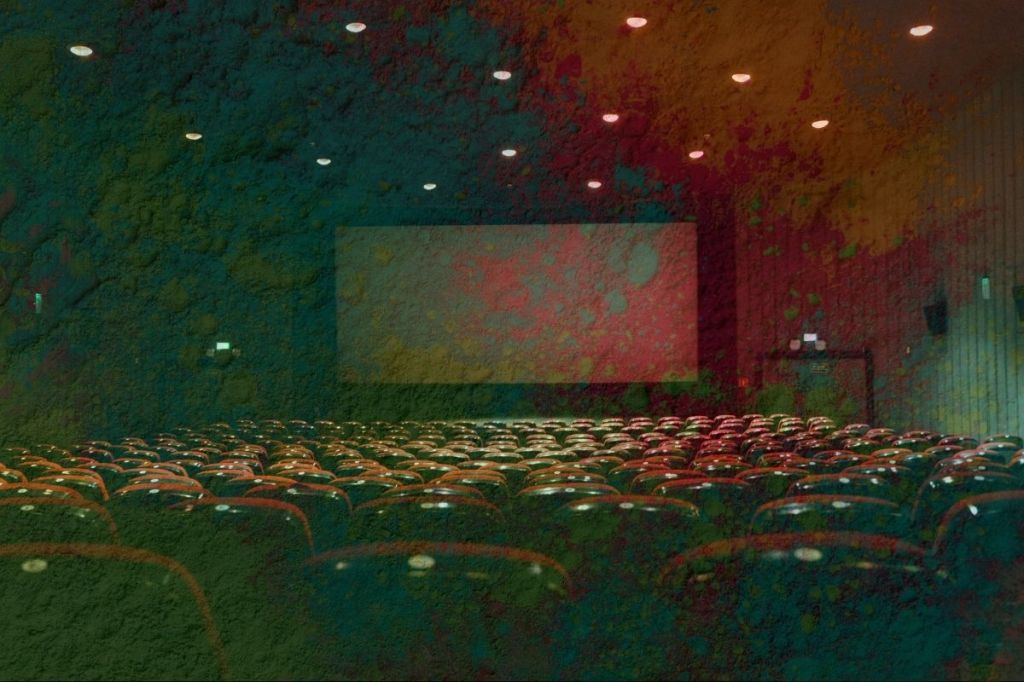
I was pleased on that Monday. I’d seen an item in the local paper: our arthouse theater held a year-long series of classic movies — this year the line-up would culminate in the fall with the animated film, Fantasia.
Fantasia! I was eight or nine when my grandmother Simi had taken me. Simi’s own grandmother had taken her when she was very small. The recollection of it floated in my imagination above and beyond the dark smudge of my memory. I remember the stickiness of the theater floor, the smell of popcorn butter in the upholstery, the sweep of parting curtains. I remember the loops of sky-writing filling the screen, the rippling music. I remember the sensation of near-levitation from my cushioned seat.
That day, decades ago, in that neighborhood theater, I’d received my first clue into myself. Up until then, I hadn’t quite grasped that I didn’t “do” the world correctly — I didn’t feel so much as experience feelings as images and colors and music; I didn’t think so much as associate and catalogue, and these stimuli often intersected with each other within my body, as if they were words in a language as specific and nuanced as Latin or Aramaic. All my life, my — approach, if you will — my ideas and feelings have conjured up colors, vibrant cobalt-blues and searing yellows splashed through my senses; when I was very tired or happy I sometimes saw a coral-tinted mist. When others expressed grief, pain, anxiety, I saw viridescence, aubergine, magenta, Or mental images would arise — crowds, rain dripping from black branches, a hat on a picnic table. And music. Sounds as random as birdsong; a piano trill; the lilt of a pop song. For years, I believed everyone perceived as I did. One day, I was perhaps 11 years old, when our dog Prokofiev died and I asked my mother how long everything would look so purple.
“Oh sweetheart,” she said, sweeping my hair back from my face, “You mean blue. You’re feeling blue.”
I cocked my head. “No, Mama, I’m seeing purple. Are you seeing blue?” She asked me to repeat myself, then she looked at me for some moments without blinking. Finally, she told me that things wouldn’t be purple much longer and please never mention the colors to anyone.
Increasingly I felt estranged from others and profoundly alone. Until I saw Fantasia.
***
Our girls, I thought, might enjoy Fantasia. Trent would likely be indifferent. And Hugo…I wondered about Hugo.
Our sons were instant companions, but Hugo lived at a different pitch — his tone milder, his gaze longer. He paused before speaking. He asked questions — even of adults — and then listened to the answers. He looked closely at things. Our Trent, well, he was a good boy. Still, sometimes I thought I saw a kind of streak in him.
Jay said that’s how they are — he’s just a regular kid.
So, on this Monday, late in the afternoon, the boys were up in Trent’s bedroom, playing with his mini-bots. Hugo would be staying for dinner. Reynard worked late and increasingly Olivia needed periods of silence during which to unspool. She had her “moods.” That day, I leaned over the table putting down plates. Each dish was just so – a seared chicken cutlet, peppered baked potato, an orderly stack of asparagus from the garden, bold and verdant. Hugo speared a stalk. He was humming something almost inaudibly, which I realized were notes of Vivaldi’s Concerto in E Major — the one called Spring. I’d hummed the very same thing earlier that day as I’d scrubbed the potatoes. I supposed one or both of us must have heard it on a commercial recently.
“Durr Ugg-O,” Trent said.
Hugo grinned at him.
Jay was home late, hanging up his jacket, loosening his tie. “Helen, do you- can you-” His hand was on my arm. He glanced at Hugo. I almost didn’t notice. His voice was compressed in a way that was not quite angry. Something had happened or would happen. He silently directed me to the back door then pulled it shut behind us.
“Jay?” I frowned. Wavelets of crimson lapped at the edges of my peripheral vision. “Honey?”
“So, I was in the mailroom….”
“Yes?”
“I had to run something down there before the noon pick up. And the boys were all goofing around like usual. They didn’t see me — I was in the vestibule. And I then overhear one of them saying, ‘Did you know there’s a sub right in my neighborhood?’”
“Wait.” I frowned. “Who was saying this?”
“Honey.” He took my elbow. “It was Frank Conyers.”
“Frankie — Joe and Delia’s boy?”
“Yes — Frankie. Which means a sub in our neighborhood.” He stared at me. His eyes seemed to be glowing.
“A sub. Here?” I touched the base of my throat. There are only ten houses on our street. We knew every neighbor. I coughed a funny little laugh at the thought. “No. We would know.”
“Helen, listen. So, I then heard the other guy — Lorenzo Adams — say, ‘Yeah, the Lang house.’ Lorenzo says, ‘I’ve stamped and registered their indemnification documents.’” Jay lifted his eyebrows. All sub-owners required indemnification in case of catastrophic behavioral malfunction — which almost never happens — as we’re told.
Jay’s division handles the insurance work for subs — which is considerable, and much more complicated than people realize. More so all the time. Just last year subs were quietly redesignated from “property” to “individuals.” There are only about twenty-thousand subs in existence — that we know of — most located in big to mid-size cities. But we’ve heard their numbers are growing as Continuation rolls out more cost-effective models. Their identities are as closely guarded as those in witness protection programs. The main manufacturing plant is right here in Utica, so it wasn’t unusual to hear rumors about a template or Series 01 turning up somewhere nearby — a clerk at the smartcleaners or a landscaper or the IT guy at school. But to have befriended one — right next door? Unknowingly? I blinked and blinked. A thin shrilling started in my ears.
“The Langs?” I said, almost whispering. “Which Lang?”
He shook his head. “Herb Teppers came in right then, wanting to talk about the new vaccination schedule charts. That was all I got.”
“Are you saying…” I was talking slowly, my thoughts beyond my grasp.
“Are you-”
“One of the Langs — might be a sub,” Jay said. He grabbed my hand, his fingers pressing into the center of my palm, a sharp, wordless message. “Not an actual.”
I closed my eyes and shook my head slowly. “No. I can’t….”
“I know.”
“How? None of them is — none of….” I tried to think. “I mean – it couldn’t be Reynard — there’s a cap on sub income levels and their job sectors. He’s easily in the 35% bracket.”
Jay laughed softly. “And how could he be? What a stereotype. An accountant? Reynard is already like a human sub.”
“Or- one of the children-?”
“Highly unlikely.” Jay frowned. “Child manufacture is almost unheard of since the Fourth Wave. Under 18s required special legislative exemptions.”
I frowned. “But that leaves….”
He looked down.
I covered my face with my hands and closed my eyes and stayed like that.
Jay touched my elbow. Slowly, I lowered my hands. “Not Olivia,” I said. “How could Olivia be a sub? We would have noticed, Jay. I would have.” I felt as
if something new had entered my bloodstream. I could feel it in Jay’s fingers, passing directly from his hand into my hand. Both of us stared at the Langs’ backdoor and their kitchen windows, which had turned gray in the late light.
“No, darling, we wouldn’t have noticed. That’s the whole point of a sub. You know? They’re seamless? Everyone always thinks they can tell. Even doctors can’t tell. Even data miners. Even insurance companies, Helen,” he said. “No one knows until autopsy. Let’s face it — it’s a growth industry. They say there are companies in Vietnam and Korea where subs are making subs. There are so many in production — it’s not getting reported.”
I wanted to sit right down in the grass but it was wet so I kept standing. I knew the background from my days in P&C — before sub manufacture there was a budding human regrowth market. It started with medical replacement parts and expanded to the whole-clone production of laborers and companions. In 2054, whole-clone development abruptly shut down when a regrown sanitation worker drove his truck through a crowded playground. It wasn’t the first incident — there had been too much abuse: identity theft, organ harvesting, regrowth-trafficking, baby marketing, and on and on. These days, human regrowth is permissible only for the creation of discrete physical parts and internal organs, up to but not including the cerebrum, cerebellum, and brain stem.
But the market recognized the demand for emotional support substitutions — the need to respond to loss. The development of manufactured subs — brand name Continuations — moved into hyperdrive after the Regrowth Prohibition Act. Subs were refined, one generation after another, increasingly exact. They were “born” with bio-identical skins, eyes, hair, unique fingerprints directly copied from the originals — the voices, the behaviors and personality, each precise echoes of their original models. None biologically grown, yet as close to regrowth as synthetically possible. They grew and aged, ate and defecated, caught colds, sang songs, exercised, laughed and cried. Over time, Jay became increasingly expert in Continuation actuarial statistics — working up risk and life-expectancy tables much like those for biologicals.
“I’ve been thinking about this Helen, and I suspect — if it’s true ….” He shook his head. “It’s got to be her.” I couldn’t speak. I stood beside Jay, staring at the gray windows. The gray light was infiltrating my eyes. A low misty tune seemed to emanate from that grayness.
“Olivia?” I asked softly. I waited for the impact of this new idea. I wondered what I was feeling. “Did Reynard ever say anything to you?” Though I knew Jay and Reynard communicated mainly through sports meta-analysis. What I was actually thinking was: Olivia? Never a word?
Jay wiped his sleeve across his forehead. “That’s not the kind of stuff we really talk about. Personal stuff.” He sighed. “And I guess you don’t necessarily want to mention it to other people.”
Were we other people?
“Like that’s the whole point of a sub,” he added. “A continuation…”
“Yes, yes — not a replacement,” I finished the slogan.
But there was more to it. Because despite all the advertising, subs were still considered a bit shameful, a bit pathetic. The idea that one would, in essence, try to substitute an object — a very complicated, breathing, expensive one, but an object, still — for a biological human. Like a blow-up doll or a child’s toy. It was considered a hate crime to call someone a “synth.” Subs were brought into homes and communities with such stealth that their subsequent friends and associates felt shocked and deeply betrayed upon learning the truth. I once heard a discussion on the Unvarnished news segment in which a political sociologist was expounding on the “existential revulsion” humans feel toward their own replacements.
“But isn’t it the sneaky-ness too?” the host asked — peevishly, I thought. “Like, what are they hiding? It gives me the creeps, the whole idea of subs — swapping robot Uncle Joe for dead Uncle Joes — and trying to make everyone think it’s the same guy. It isn’t the same!”
“Yes, well, we’ve never been over-fond of the Other,” the sociologist said. “And if we don’t know exactly who — or what — is the Other, we might also feel a deep sense of betrayal when confronted with it. Even dread. Even loathing.”
As, perhaps, I did as well. Had there been another Olivia? An original? For subs were produced only upon the death of an original, biological being. My breathing was fragmented; I was having trouble looking at Jay. “But when. When did she-” I broke off. The thought was too much. My best friend. “Not while we’ve known them?”
“Oh, no,” Jay said. “Certainly not. It must’ve been years ago. Who knows — it could’ve happened when she was a child. Even at birth.”
“Baby subs?” This hadn’t occurred to me.
“With the right political influence and sway? Subs can be created at all ages.” He smiled then stopped. “They haven’t perfected embryonic implantables yet, but they’re working on it. Christ Software Coalition has a line in progress called ‘Regrets,’ for late term abortions.”
“No.”
“They scan fetal stem cell DNA and reproduce it exactly.” He lowered his voice. “They say there are subs that are so bio-identical they can successfully procreate with biologicals. Even with other subs.”
I blinked. I looked at the grass for a moment — its movements soothed me. I whispered, “Jay, are you sure about this? It’s really just a rumor, right?”
“About the Langs?” He shrugged lightly, an open-handed gesture. “The mailroom guys — they know more than they should.” I knew this was true — the mailroom, a Super Union filled with young knuckleheads, was also the company’s quiet seat of power, favorite confessional of the C-Suite.
“Still, entirely possible it’s nothing,” Jay added. “We shouldn’t panic.”
“You know Frankie and those boys. Maybe they were just making things up. Just to show off.”
“Maybe so, maybe so,” he said.
“I mean, how would they even know, right? Isn’t that the whole point? Seamlessness?”
Jay was nodding. “The only ones who know for sure are in the Department of Statistics. They don’t talk to anyone. They don’t socialize — they don’t even marry outside of Statistics.
“So it could be utter nonsense.”
“It could.” Jay rubbed his forehead.
“It probably is,” I said. “I mean, Olivia.” I laughed deliberately, a sound like a bird flapping into flight. “But Jay. If somehow it were true — I mean, do subs know — about themselves? Would Olivia?”
“Only if someone’s told her — right? That would be their decision, I guess. The manufacturer claims to produce models with complete experiential memories downloaded.” He inhaled through his nose. “You know, honey, some people consider it cruel to reveal discontinuity to subs. It’s seen as-”
“Gratuitous and unnecessary,” I said. I remembered the statutes. I’d never considered before how these legal decisions were written without consulting the subs themselves. I sighed, thinking and absently studying our house. Our painter had run out of Colonial Ivory, the north side was just white primer. We’d never gotten around to having it painted: it looked stark and unforgiving in the late light.
“But honey, I mean, does it really matter — in the long run?” Jay asked quietly. “If she’s a perfect replica of herself — then does it matter?” I stared at the unpainted wall; I was marveling at the way something so theoretical could suddenly become actual.
“I don’t know. Maybe it doesn’t matter.” Our shoes were getting wet. It had rained earlier and there was dampness creeping up their sides. From a house a block or two away, I thought I heard a few bars of Shostakovich and closed my eyes.
***
Once you hear something, you can’t really unhear it. Or unsee something, or unthink it. There is no erasing the forbidden thought. Which is why attorneys are sometimes willing to risk making outlandish accusations in court, knowing the other side will shout “Objection!” and the judge may rule “Sustained.” Because there is no take-back. Claims adjusters and court reporters know — there is only so much that can be quantified. The genie swirls out of the bottle. Still, I tried. I told myself to put it out of my mind. I said it didn’t matter. It couldn’t. Because if it did, then what course of action to take?
The end of summer was on us. Olivia and I went back to school shopping so our boys would have their matching backpacks and lunchboxes. And I was fine, really. Though I’d heard this “thing” (Objection! Sustained!) and couldn’t quite stop hearing it. I looked at the back of Olivia’s head in the iridal scan checkout line and I was thinking, if it happened, then that makes two secrets. The new Olivia, plus the original Olivia. Two secrets — her death and her resurrection. And then it went flying around in my brain again: when did it happen? Oh, darling Olivia — what happened? How?
I frowned at Trent’s new Disney backpack and blinkblinkblinked trying to hide my eyes.
Standing at the checkout, I began to wonder what it even meant to be “close” to another? What was “friendship”? I’d thought such a relationship was predicated on mutual disclosure, an unearthing of truths closest to ourselves. And yet hadn’t I hidden elements of myself? I’d never mentioned my colors and sounds to Olivia, afraid that this oddity of mine would repel her. How little faith I had in my “friend.” In myself!
One afternoon, after the kids had headed back to school, I walked through the grass to the Langs’. I had a bottle of red wine and a deck of cards; these were props –there was a half-formed thought in my head, an idea of searching for evidence, even questioning her outright — though how does one ask another, Are you real? The day was warm, golden with late-September New York heat, and the night would be very cool. As I approached the house, I heard Olivia’s ghostly piano trickle through the opened kitchen window. I stopped and closed my eyes — I recognized the aria, its metronomic pulse; the teasing, mournful rhythms of “Habanera” ticking through my head: Love is a rebellious bird.
After a few moments of monitoring the perfect regularity of her playing, I heard a voice nearby say, “Thank you, Helen — for being such a good friend to her.”
My hand went to my chest. Reynard stood in the grass, also apparently eavesdropping on Olivia’s practice. “Oh, well,” I said, out of breath. “I often feel like I’m the one who should be thanking her.”
He smiled and shook his head. He had clipped Mediterranean features, full dark eyes; even his casual clothes always looked beautiful and expensive. “Even so. It’s been-” Again, that smile, the small shake of the head. “It’s been tremendously hard on her, even so. The loss.”
Was this some sort of admission? Was he referring to the pain of birth — of giving birth to oneself? I wasn’t sure if I was meant to ask anything more or if such would be construed as prying. I watched his dark eyes and waited to see if he might offer more. Instead, he touched my wrist and kissed my cheek and then went inside. I took my wine and cards and walked home. I put it out of my head. I was more of a functionary by nature than an investigator. I tried to be. Such things that I needed to overlook! That my best, very best friend hadn’t shared with me what had to be the most cataclysmic experience of her life — her death. And yet, I told myself when she turned, laughing into my eyes, she must have kept it hidden because it had been hidden from her. But I couldn’t imagine anyone as perceptive as Olivia — the “Olivia” I knew — could ever be oblivious to her own rebirth. As such, if she’d hidden it, she’d done so out of love for me, out of fear of losing that love. I wanted to tell her: I’m afraid too. I wanted to say, I’d have done the same. I wanted to say, I don’t care what you are.
The next day, the boys came home and Trent stuck his head in the door to yell, “Going to Huge-o’s.” And I found that I was saying, quickly, “Hey, why don’t you guys come here? We’ll get Retropie.”
“Serious, Mom?” His round brown eyes fixed on mine, shock and doubt and hope all hovering in his face. From somewhere I heard a flitter of opening notes — I think Chopin’s Orchestral Suite No. 3. I thought, how much longer will my son be a boy? How much longer do I have this?
Retropie was made of corn starch, synthetics and sugar, and was beloved of nearly every child on earth. Our rule was once a month, and we’d had it earlier in the week. But Trent wasn’t risking waiting for me to remember. He ran after Hugo screaming: “Uggo, my house — Retropie.”
I just wanted to watch the boys play — that was all. Jay had taken me aside the other day and said he was thinking we should move the kids to private school. Pursuant to this, he added, he was thinking we should consider moving out of state and start somewhere fresh. He’d shaken his head.
“Helen. This whole situation. The Langs. What do we really know about that family? What else aren’t they telling us? What does it mean for our kids — for their best friends’ mother to be a — what — a robot? A doll?”
Now I put out plates and poured the boys those big glasses of milk they both loved. Jay wasn’t home yet, which was just as well. I put a slice on my plate. Berry skulked in with Daphne just behind her. “Retropie again? You know I’m trying to do low oils!” She took a slice and left, eyes glued to her wristchip.
“Thank you, Ms. Helen,” Daphne said, also watching a wristchip. Laughing, grabbing extra slices, the boys lingered at the table. I noticed the way Hugo smoothed his hair behind his ear and how neatly he wiped his fingers on his napkin. Wavelets of pink started at the edges of my eyes. Hugo was different from Daphne, I thought. More — special. I was feeling such things. I think I was grieving. Or maybe I was hopeful. I wondered for the briefest moment if it was possible sometimes — very accidentally — to love other people’s children more than your own.
Trent, God love him, suddenly said, “Uh, Mom, what’s with the face?” Was it like having an affair? Was it possible to cheat on your own kids?
“Just tired, Trent, that’s all.” I picked up my glass of wine. “We were very tired, We were very merry-” I said, took a sip, then sighed.
“We went back and forth all night on the ferry!” Hugo piped.
I put down my wine, “How did you know that?” I smiled. “That line?”
“Durr, Mom,” Trent interjected. “Hugo is a nerd.”
“I like that poem.” Hugo grinned, his freckles spreading. “My mom reads stuff like that to us all the time.”
I stared at him, his lop-sided smile, the chipped right incisor, the dry patches of skin on his lower lip. So like Olivia. Or I should perhaps say she was so like her son. I knew the mailroom rumors had to be true. I saw Olivia’s unbroken curtain of hair, the open book in her hand. Hair imprinted from human stem cells, high-tech bio fabric skin, light-sensitive pupils — iridal scanners can’t detect sub eyes: such a marvel of ingenuity and engineering. Underneath there was a complex vascular system of blood red coolant, and beneath that, exquisitely-crafted internal organs: a surgeon wouldn’t detect the difference.
“If you prick us…” I mumbled.
“Do we not bleed!” Hugo responded, pleased with our game. “Mom is always saying that.”
“Massive nerdism.” Trent took the last slice of pizza. “Enough with the poetry, tron-boy.” “Trenton!” I snapped. “We do not use that sort of language in this house.”
He stared at me, eyes wide, his face very red. I’d never spoken so harshly to one of my children before. “Sorry, Mom,” he said quietly.
I went out of the kitchen, up to our bedroom and laid on the bed, the back of my wrist across my forehead. I stared at the stucco ceiling without blinking.
***
There was something called accidental perfections. It was a rare but recurrent problem that claims adjusters had to track. Human minds were designed to be perfect or, well, close to it. But as our fetal cells divide and increase, our emergent brains grow their casings, skull and skin. Our minds shrink into these shapes. It is the nature of the mortal body to be flawed, constricted, inaccessible — innately limited. Subs are created in the image of each original person, but for some reason, sub minds are prone to flashes of random knowledge, even brilliance — “perfections.” Reminiscent of what was once called Savantism among the neuro- divergent — unusual gifts — like the ability to do instant, super-advanced calculations — or to quote a library of poetry to your children. It’s a manufacturing error, a ghost in the machine. Once detected, such errors can be corrected, but these perfections are often subtle, easy to miss. And I’m told their families don’t always want them corrected — there’s something a bit heartbreaking about deliberately diminishing brilliance. Easier to “remember” your loved one as having been more perfect, perhaps, than to insist on recapturing all their failings.
Subs reflect the quirks and flaws of the original models — vanities, predilections, bad habits, smallness, pettiness, avarice, and the rest of it. They can also develop diabetes, lose their hair, break a limb. And they’re subject to a kind of dementia similar to Alzheimer’s, their brains tightening into electrical tangles and “plaques.” It can happen instantly or take years to manifest, gradually manifesting as a compulsion for order and tidiness. Sometimes they start throwing away possessions, emptying entire homes. Eventually, they stiffen, drawing into themselves, as if in response to the awful randomness of the biological world. They retreat into corners and stop speaking or eating, until they simply switch off. They age while living, but their deceased bodies do not decay.
I laid there on the bed, rubbing my temples slowly, thinking about Olivia wiping and wiping her counters, her growing need for long, silent evenings. When they first moved in, she had filled a few bookcases, but now there were books in every corner of her house, flowing out of the shelves and into stacks on the floor. It seemed to me, as I laid there, mentally reviewing the case, that when she wasn’t on the piano she was bent over a book. I imagined lines of poetry or plays that I could lay out before her. Not a test, exactly, but a game, call and response. I wanted to reassure myself that it was all nonsense. As surely it was. Olivia was Olivia was Olivia. An Olivia by any other name.
But as I closed my eyes, my mind filled with eggplant-colored darkness. I fell into a drowse, broken dreams of marionettes and Pinocchios. When I woke it was pitch black outside the windows, my jaw aching as if I’d clenched it for hours.
Jay was right, I thought. Suddenly I wanted to tell Hugo and Daphne to go home. I wanted to lock the doors. I wanted to call our realtor and find out what our house would bring on the market.
One hand on the stair railing I went downstairs slowly, my joints stiff. I might’ve aged twenty years. I could hear the boys talking to someone. I appeared in the kitchen door and they looked up. Olivia stood at the table in bare feet and jeans, eating a cold slice of Retropie.
“Oh there you are!” she said and picked up a deck of cards. “I was about to come looking for you. Game of gin?”
My lips trembled. Ineffable colors rose before me like twists from a lantern’s spout. It seemed that her face was so familiar, so dear to me.
“Mom, can we have more Retropie?” Trent knew how to hang his head to make his eyes larger and sweeter. “I know it’s pretty late.” I tasted vanilla, I tasted lemon. Was it just sameness that I wanted? Just the pleasure of life continuing as it always had — easy and familiar. And if so, was that wrong?
“Stop all the clocks,” I murmured. “Cut off the telephone…”
Olivia laughed. “Prevent the dog from barking with a juicy bone!”
I felt a thud in my chest, as if someone had knocked on it. “I guess so,” I told Trent at last. “A little more.”
She smiled at me, not blinking. “You deal.”
***
In the end, none of it really mattered so much, did it? Was it embarrassing that my best friend was, essentially, fabricated? Oh, aren’t we all, really? Just from different factories. Does it matter that we push aside grief with various sustained illusions? It does not, I maintain. The only narrative that matters is the one that we will into being.
Nothing in fact matters. We live in a universe filled with objects and chaos and events and we tell ourselves how to think and feel about these things. Some of these narratives seem more congruent with happy or rational or calm states of being, but that doesn’t mean they are any truer or even more desirable.
The days went by, as did the months, in their sameness, the careless repetition of being alive that wears a path in the carpet. These were days of watching Olivia and of Jay watching me watching her. There was no more mailroom chatter. The fabrication of subs was being off-shored to the cheaper foundries of Micronesia. The Evening News reported that the Revangelist Party was drafting legislation to outlaw all forms of Ultra-real simulacra, AI, or any other manufacture of DivineCreation (TM). Rite-wing lobbyists, Jay reported, were calling on the Senate to put the entire industry on pause. A recent case, Dodgins V. Amazon, had come before the Supreme Court to determine the legality of the purchase of URHS (Ultra-Real Human Simulacra). An industry insider appeared on the Truthing segment insinuating that subs were about to be recalled and implanted with death date chips — ten-year life spans were to be the new norms, to give owners ample time to replace the replacements, install updates, and to better regulate owners’ emotional experiences. They would be embossed with maker’s mark codes. Earlier 01-Gen subs — the few thousands remaining — would be grandfathered in, allowed to arrive at their “natural” expiration dates.
A few weeks before the start of the holidays, I saw an item online — this Saturday was to be the last film in the Art House line up: Fantasia. I had almost forgotten. Saturday morning, I got up early and put on non-jeans and lipstick. Trent and Berry stared at me from the living room carpet where they were watching Danish anime on their wristchips.
“Why are you all dressed up?” Trent asked.
“Guys, remember that old movie I was telling you about? Fantasia?” Berry rolled onto her back, holding her device up over her face.
“Pass,” she said.
“Hugo and I were going to race mini-bots,” Trent said.
“Take you for ice cream after?” I wheedled.
Trent gave a long moan. “Why can’t Berry do it? That’s a girl thing.”
Not moving her eyes from the screen, she said, “Because you’re a suck face, suck face.”
***
No one ever finds perfect happiness. But I think there are times, little beats, when we come close. Grasp them and they melt away. You have to let them dance lightly on the surface of your palm.
At the Art House, the old-fashioned curtains purred open and our faces were bathed in blue screen light. The boys kept laughing and Trent tossed popcorn at the screen; the elders in the front rows kept swiveling to give us looks.
Eventually the music rose and mysterious shapes and colors began to move across the screen. I snuck a glance at the boys who’d settled into the sway of the film. Olivia murmured and for a moment, she took my hand. And I thought, tears at the corners of my eyes, that any creature, made or born, that was moved by this film, must be human.
I settled into it: The Philadelphia Symphony, the Bach, the Universe in a dandelion seed. By the time Mickey appeared to steal the wizard’s cap and work his hapless magic the boys were captivated. I stole glimpses at them, at the way the lights spilled over their faces, and I thought, how strange, how strange that we are meant to do this — grow up, grow old, to love and love from the very root of our souls, and then to lose each other, and to endure it, as if such a thing were endurable. It is untenable, impossible, and yet this is what we are born to do.
Afterward, we went into the dazzle of light that happens when leaving the
movies in the day time. Olivia looped an arm through mine, tipped her head and murmured, “Thank you, Helen, What a wonderful idea.”
We were just pushing through the glass lobby doors to the parking lot when I saw a girl coming toward us. Her arms and legs were encircled by carbon fiber braces. Each step required her to balance against a brace. Her hair was loose down her back, and her face had an unexpected radiance, a coral-colored glistening. She was around Berry’s age and I wondered where her parents were.
I heard Olivia’s soft intake of breath.
Certainly, passersby judged this child’s parents for not clone-farming a corrected body for her. Yes, there were those back-to-biologites among us who said we weren’t meant to reject our native bodies — some even refused organ transplants and facial upgrades. But there weren’t that many. We politely passed her — the slow, fractured ballet of her walk — without turning or seeming to notice. I wondered if her parents were Jehovah’s Witnesses, or perhaps she had some condition that contra-indicated a correction procedure. I was musing over this when Hugo stopped abruptly, returned to the door, and held it open for her.
I inhaled when I saw Trent turn then as well. I expected him to make a comment — some glib disparagement.
“Hello,” my son said to the girl in a nice, natural way. “Are you going to see Fantasia? Oh, it’s-” The door swung shut as he and Hugo followed her inside.
Through the glass, I saw them escort her to the concession counter. They carried a container of popcorn and a drink for her into the auditorium while she teetered in beside them. I stared, so surprised to see this behavior from my son I thought he must’ve known her. But as they returned through the lobby, Trent smiled at us and I knew — it was Hugo’ influence, his example — that had led my son.
“Oh, look at our boys! The utter, the utter-” For a moment, she trailed off. I thought she was caught in some sort of heuristic feedback loop. But then she turned to me, eyes nearly opaque with tears, one hand squeezing my arm. “The sweetness! Oh, Helen you would never have guessed, would you? No one could ever imagine it, could they? At least not right away — when they first meet him?”
I frowned, blinking into her eyes. For a few seconds, the world seemed to go slower and slower. My breath grew heavy, like lead in my lungs. The world telescoped away.
Olivia caught sight of my face and turned to me inside of that very slow swirl, putting her fingers over her mouth, and saying, “You mean you didn’t know? At all? I just assumed — I mean, with Jay’s work….Well, actualIy, I guess I always kind of think that everyone can tell.”
“No,” I murmured. “Not at all. I couldn’t tell.” It was strange, what a recalibration this was requiring of me. Shock, I’d have to call it. Even though I’d settled into the idea of an Olivia-substitute, Hugo, somehow, cost me more.
Olivia’s fingers fanned over her mouth, their corners trembling. “But that’s wonderful then,” she said. “He passes.”
***
Weeks later, I was home, doing something, putting dishes into the cupboard. I could hear Berry and Daphne in the living room, squabbling about something.
Trent and Hugo were on their stomachs in the family room playing mini-bots. Then I felt a small hand touch my arm. “Thank you — for letting me see that.”
The gentle, unstrained quality of his touch took me back to the day at the movies. I adjusted the mug handles into a perfect line in the cupboard and looked down at his brown eyes.
“See what, dear?” I asked.
Hugo’s hand was still on my arm. “The Fantasia movie? Like when the Stravinsky comes up and I saw purple and they showed the sky. It was like it showed me to me….” His voice was ardent and he was looking straight into me in a way that people simply don’t ever look. Certainly not adults. “I knew there were different, um, approaches — between biologicals and subs. I never knew that this was mine — seeing through symbols, metaphors, not hormones and enzymes.”
“Oh, Hugo.” I turned to the cupboard and began placing the second row of cups just so. I stopped and lowered my hand accidentally shifting a handle out of alignment. “I hadn’t realized before — about you.”
“Oh, nobody does,” he said blithely.
Our hands knocked into each other’s as we reached simultaneously to make the same micro-correction to the cup handle. I pulled back. Wavelets in pink and yellow, dashes of them like asters bloomed across my eyes. I watched them open and wink at me.
“But that is the approach — for me — and you — isn’t it? The way we see things, how we’re connected to the world. Don’t you think it is?”
I felt my lips trembling. “What do you mean?”
He kept staring.
“What does your mother tell you?”
“Well, she doesn’t know how it is. You know she doesn’t.” He was still looking. “But you do.”
Don’t tell other people about the colors. It took me a moment to breathe. “I think so,” I say at last. “I guess it might be like that.”
And Trent came in then and said, “Uh, talking to my mom? Okay psycho.”
The look snapped off with a blink and off they went.
Later that week, I sat down with Jay and told him, no. Let’s stay here, honey. Let’s just stay. I shook my head and held tightly to my knees. I didn’t look at him when I said that. And I didn’t when I asked him, who even knows what a person is. After a moment, I heard him let go of a breath.
There’s a saying in insurance: Everything is exactly the way it’s meant to be. It seems like that’s probably the best anyone can hope for — just being what you’re meant to be. That’s all we’re left with, isn’t it? There is that. There is music and color and order. And each other. And that is all.
Diana Abu-Jaber was raised between Syracuse, NY, and Amman, Jordan. She often writes about cultural identity. Her latest work, Fencing With the King, was featured by Apple Books as one of this year’s most-anticipated novels. Her other award-winning novels include Birds of Paradise; Origin; Crescent; and Arabian Jazz, a middle-grade novel, Silverworld, and two memoirs, Life Without A Recipe and The Language of Baklava. Diana is a professor at Portland State University and lives with her family in Fort Lauderdale, Florida.
 ELEVENTH HOUR LITERARY