
I take credit for 17 marriages, 22 engagements, and 12 babies. Couples who met on my app, Match Me if You Can.
“What about your love life, Lindsey?” my mother asks, during our weekly phone conversation. “When are you going to stop doing for others and worry about yourself?”
She moved to Seattle with her fourth husband last spring and spends most of her time teaching Zumba to arthritic seniors at the local YMCA. The type of woman who needs a man the way a tie needs a neck. None of her husbands were my father, a one-night stand who slipped out before she woke up the next morning. For years, it was my job to prop her up after every failed relationship, to dust her off and convince her that men are like taxis – there’s always another one right around the corner.
***
The next day, there are four frantic messages from my mother demanding I call her immediately.
This could only mean one thing: she’s found me another blind date from hell.
The last one was named Howard. A grad student at NYU with bad breath and a 165 IQ, which he announced as we were holding balancing stick poses in a hot yoga class. I go on these dates because not going is worse. Ma never lets me hear the end of it. “Your ovaries are drying up as we speak,” she tells me.
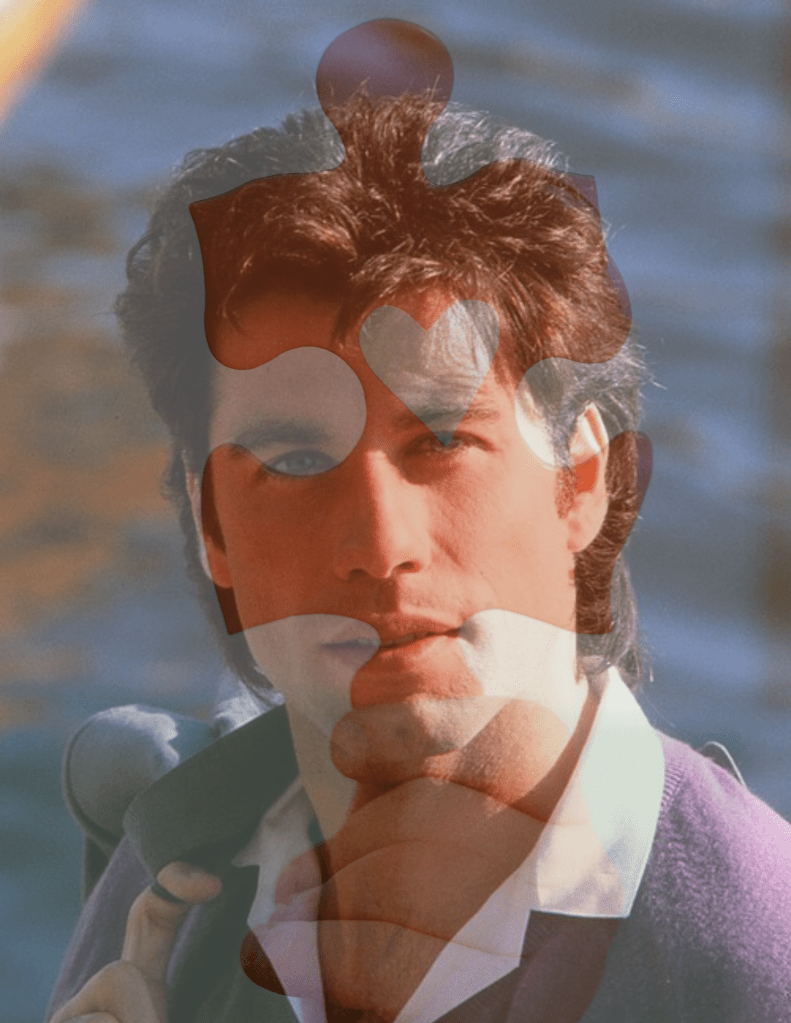
When the doorbell rings, I think it’s Jenn Fusco, a Type A stockbroker who recently went on two dates with an engineer I met in the produce aisle of Trader Joe’s. She’s worried he’s losing interest. I don’t even bother to look through the peep hole and am caught off guard by the man standing there: tall, pushing 50, with the type of blow-dried hair that belongs in a John Travolta movie, circa 1977. He’s wearing jeans, a light blue button-down shirt, and black sneakers.
For a second, I think maybe he wants to sign up for Match Me if You Can, only he seems like the type who believes he can do just fine on the dating market without any help.
My friends say that I’m blessed with an uncanny knack for remembering everyone I’ve ever come in contact with and putting them in context, like some giant Where’s Waldo puzzle. But I can’t connect this guy to anything.
“Lindsey, right?” he says.
“Yes.”
“You’re not at all how I pictured you.”
Then I get it. Ma strikes again. Only this time she sent Mr. Right over without even waiting for me to sign off on it.
“Did my mother send you?”
“I was going to call first. But I was in the neighborhood so . . .”
“You know, I really don’t have much time. I’m expecting someone.”
“That’s all right. If I could just come in for a little while, I’d love to talk to you.”
I’m thinking 15 minutes counts as a date.
“Sure. Come on in.”
I work out of my apartment, a one bedroom in the Flatiron District. Right now, it’s in “Client Mode.” The bathroom is clean and there are fresh flowers on the coffee table, along with coasters and a box of tissues for the person who’s having a rough day.
“I’m John,” the man says, sticking out his hand. “Charmed.”
John, like Travolta. He plops down on my sofa without asking.
“So . . . are you from New York?” I say.
It’s one of my ten most popular dating questions.
“Anchorage, Alaska.”
“It must get cold there.”
“Yes. You’re nothing like what I was expecting.”
“I find it’s healthier not to have expectations.”
“Yes. But. . . it’s difficult, right? After all this time.”
“Has it been a while since you’ve dated anyone?” I ask, switching on my professional voice, concerned but detached.
“Since I’ve . . . what?”
“Dated. Anyone.”
His face scrunches up in surprise. “Wait. You think I’m here to date you? Haven’t you spoken to your mother?”
“No.”
“She told me she was going to talk to you. She and I . . . we thought . . .”
There’s a weird feeling at the back of my neck, midway between a chill and a pinched nerve. “What are you trying to say? What did you think, exactly?”
“Lindsey, I’m not your date. I’m your father.”
We sit there staring at each other, not speaking. It takes a lot to shock me, but the room goes in and out of focus for a moment. I grip the arms of my chair like I’m about to fall out of it.
“I found your mother again after all these years on Facebook. We started corresponding. I had to fly out to Seattle on business recently and we met for coffee. She told me about you. We constructed a timeline and figured the whole thing out.”
“Didn’t Ma track you down when she found out she was pregnant?”
I’ve asked my mother this very question many times over the years and she claims my father vanished into the mist like a ghost.
“Yes, of course. She tried.” His eyebrows are dancing up and down in this weirdly unattractive way. “But it was difficult.”
“Why?”
“Because I was off the radar for a while.”
“What does that mean?”
“I was in jail.”
“Perfect. That’s just perfect.”
“Lindsey, if I’d known about you, I would have tried to be involved in your life. But I didn’t know until four days ago. So now I’m here.”
“It’s a little late. You can’t exactly change diapers or sign my report cards anymore. I’m a grown woman who’s doing just fine on my own.”
I stand up. What I want more than anything is to get rid of him and pretend this whole thing never happened.
The doorbell rings and I race to answer it. Jenn Fusco is standing on the other side of the door and the way she stares at John makes me queasy. “He was just leaving,” I say, not looking him in the eye and not answering Jenn’s questions about his marital status once he finally departs.
I couldn’t tell her anything about him if I wanted to.
***
When I was younger, I used to make up stories about my father. Sometimes I’d pretend he was the ringmaster at the circus or the goalie on the Rangers or an actor on The Gilmore Girls. Once, briefly, I thought he was my sixth-grade science teacher, Mr. Maresco, who used to let us make volcanoes out of orange juice and papier-mâché. I never imagined he’d come back to find me. For one thing, I couldn’t imagine him wanting to resume life with my mother. For another, I wasn’t lost.
“You are unbelievable,” I yell into the phone. I’m on the downtown IRT on the way to meet with my accountant and the noise is so loud I have to scream over the roar of the trains.
“If you would return my texts like a normal daughter, Lindsey, we could avoid unnecessary surprises.”
“Is that what you’re calling this? Because I call it typical. Your one-night stand reappears after 27 years and I’m supposed to thank you for my new dad?”
A homeless man shambles through the subway car and shoves a battered hat under my nose. “God bless you,” he says, after I’ve rummaged in my wallet and extracted a dollar.
“I thought you’d be happy about this,” my mother says. “You could use a male role model in your life.”
I take a deep breath, blow it out through my mouth. The homeless man has started singing “Amazing Grace.” His voice is surprisingly melodic. The notes hover in the air and people sit up straighter to listen.
“I could have used a role model. You got that part right. Only now it’s a little late.”
“Oh, Lindsey. Don’t be so dramatic. It’s not too late. He’s your father.”
“He’s not my father. He’s just some guy you had sex with a long time ago. It’s a pretty big club, remember?”
“There’s no need to get fresh, young lady.”
I’m picturing my mother in the kitchen of her condo near the Space Needle, sipping matcha tea from an oversized mug. None of this fazes her. It’s another remnant from her past, a mud puddle that will eventually evaporate.
“I have to go, Ma,” I say, ending the call as the homeless man takes a bow and my fellow passengers give him a half-hearted round of applause.
***
John Allendale. A soap opera name if ever I heard one.
He’s taken to calling me every day around lunchtime, just to “check in.”
He tells me about Anchorage, where he restores antique furniture. His workshop is in a renovated bungalow in the historic district downtown. When he first said Alaska I’d pictured seals and glaciers, but he makes the place sound lush and green. There are parks where you can see moose and, every spring, millions of birds flock there.
The details of his life are strangely soothing, like being read a lullaby in a foreign language.
Gradually, we move from daily phone calls to daily walks along the High Line, followed by lunch. Sometimes we visit museums or do touristy-stuff like going to the top of the Empire State Building. The city looks fake from up there – like it was constructed by a detail-oriented child.
“Why were you in jail?” I finally ask.
“A buddy of mine decided to rob a gas station and I was waiting in the car. I knew it was a bad idea, but we were broke. When the guy behind the counter pulled out a gun, my friend shot him. The guy died. So . . .”
“How long were you away?”
“Thirteen years.”
I try to imagine what that must have been like and can only picture bad prison movies – chain gangs, striped uniforms, men digging tunnels to nowhere.
“Does it change you? Going through an experience like that?”
His eyes cloud over. “It makes you more resilient.”
***
My best friend, Jill’s, engagement party is held at Ciro, a new restaurant in Williamsburg. I’m invited with a plus one but there’s no one special I want to take so I decide to ask John, who shows up in a navy-blue suit that looks expensive.
After the main course has been served, we go outside on the patio to get away from the noise for a while. My bridesmaid dress is atrocious, a one-shoulder, too tight sheath in a shade of purple that reminds me of a bruise which hasn’t completely healed. For some reason the fabric makes my armpits itch and I feel self-conscious scratching in front of everybody.
“Jill told me you and Mark used to be an item,” John says.
“Uh huh.”
“Is this difficult for you?”
“Not in the least.”
I realize that I’ve never actually been in love. I’ve had crushes from time to time, but the feeling always peters out like champagne that goes flat. Guys I’ve dated have accused me of having no heart and sometimes, though I don’t like to admit it, I think they’re right.
“I don’t see you with Mark anyhow. He seems like the kind of guy who’d be happy spending every weekend sitting in front of the TV watching football with a bowl of nachos and dip.”
This is exactly what Mark is like though Jill doesn’t mind.
For a moment I allow myself to wonder if my life would have been different if he’d been a part of it, around for parent-teacher nights, softball practice, Sunday breakfasts. Available to run interference between me and Ma. Maybe I wouldn’t always think I had to protect myself from feeling anything.
“You look so serious,” he says, putting his hand on my shoulder. “What aren’t you telling me?”
I don’t answer. Behind us, the band has stopped playing and the best man is making a toast. “We should probably go back in.”
“If it’s too personal, you don’t have to say it.”
But I tell him anyway. My secret fear.
“When I first moved to the city, I volunteered with a group called New York Cares. I ended up going to lots of nursing homes, helping out elderly people who didn’t have any family. Lots of times the staff would get them dressed and put them in wheelchairs, then stick them in the hallway. They’d sit there all day. That’s what I worry about. Having no family. No partner or kids. Getting to the end of my life and sitting in a hallway with no one to take care of me. Ma will be dead by the time I’m old. And even if she isn’t she won’t be any use.” I pause and take a breath. “That sounds crazy, right?”
“I won’t let them do it,” John says.
“What?”
“I won’t let them put you in a hallway. I promise.”
I feel dizzy with gratitude.
“Really?”
“Yes.”
***
“How are you two getting along?” Ma asks.
“Fine.”
“That’s it?”
I sigh loudly. I can never win with Ma. If I don’t like John, it’s because I’m difficult. If I like him, I’m disloyal.
Despite my initial reservations, it’s not terrible having him around. He’s easygoing and good company. Besides, it’s a relief to be with a man without sizing him up as dating material, which, I realize is what I do with every male I meet. It’s exhausting.
But I don’t say any of that to Ma. I never tell her what I’m thinking.
***
“I have to ask you something,” John says.
We’re at the Metropolitan Museum looking at the Edvard Munch exhibit. The paintings are amazing. I like the way the brushstrokes slash at the canvas, the slightly garish colors, all the different ways to depict anxiety.
He keeps staring at the artworks as he talks, as if he’s going to be quizzed on them later. “One of my kidneys is failing. I’d like to see if you’re a match. It’s a simple blood test. I understand if you don’t want to. I’m just putting it out there.”
What I’m thinking is I don’t want to lose him.
“Is that why you looked me up? You need a donor?”
“I’m not going to lie. It was my primary reason, yes. But once I met you and realized what an incredible daughter I have, the kidney part became secondary.”
It seems pointless to keep wandering around the Met with this new piece of information lodged between us, like a stone.
A simple blood test.
I could do that. It doesn’t mean I have to agree to surgery.
He makes an appointment at Lenox Hill Hospital for three o’clock the following Tuesday. While we’re there, we’ll get a paternity test.
“Might as well,” John says.
***
I go home and Google everything I can about kidney transplants. The web sites make it sound like no big deal. A healthy person can live a normal life with the one kidney that’s left. Laparoscopic surgery allows for very small incisions, with shorter hospital stays and recovery times. The donor is supposed to pay for everything related to the surgery, which John says he will cover. Plus, it says living donors often experience positive feelings about their courageous gifts. Only I’m not courageous. And I barely know this man.
I went to a psychologist once who told me the reason I’m not in a relationship has to do with the fact that my father was absent. A lack, she called it. It has something to do with the subconscious. She said I’m always looking for the love I never had so I push men away to create a self-fulfilling prophesy and repeat the only pattern I’ve ever known. I went to see her three times. The fourth time, instead of going in, I went around the corner and treated myself to a cup of hot chocolate and a slice of pecan pie with whipped cream. I decided that even if she was right, it’s too late to change the past. Why wish for love when I get along fine without it?
***
My kidney is not a match. This should come as good news but there’s more: the paternity test is negative. When John tells me, over pancakes and sausage at a greasy diner on Lexington Avenue, I feel like I might throw up.
“What are you going to do now?” I ask him.
“I’m on a donor list so I’ll be all right. And you could still visit me in Anchorage. I’ll show you the historic district. There are all these cool stores and restaurants you would like. And we can take a boat ride on Prince William Sound.”
He sounds sincere. I picture us on the boat. Me and my pretend father.
“Sure,” I say. “Let’s keep in touch.”
But when we’re standing outside the diner repeating our goodbyes, I’m fairly certain I’ll never see him again. I watch him walk toward the subway in his jeans and denim shirt, Travolta to the end. My heart dips lower in my chest. A faint pain, like maybe there’s something in there after all.
***
“That no good S.O.B,” Ma says. “A kidney? He contacted you for a kidney? I don’t know what I ever saw in that creep. He has some nerve.”
In the background I can hear chairs scraping as they clear the rec room at the Y. Zumba music blares. She was getting ready to teach her class when I called.
“That selfish bum. Wait till I get my hands on him. He won’t know what hit him.”
“Ma,” I say, and suddenly I’m crying. Tears splash down my cheeks, congregating under my chin.
I haven’t needed her since I was three. Maybe not even then.
“Listen to me a minute, okay. I just need you to listen.”
And then I start talking.
Beth Sherman has had more than 200 stories published in literary journals, including Flash Frog, Fictive Dream, Bending Genres and Smokelong Quarterly. Her work is featured in Best Microfiction 2024 and Best Small Fictions 2025. She’s also a multiple Pushcart and Best of the Net nominee. She can be reached on social media @bsherm36.
 ELEVENTH HOUR LITERARY